


 English
 русский
 Español
Standard DPF Filter Assembly
A basic diesel particulate filter (DPF) assembly for heavy-duty diesel trucks needing particulate control.Housing: stainless steel for corrosion resis...
A diesel aftertreatment program usually discovers the need for a custom DPF solution the hard way. The generic catalyst that performed perfectly on the bench test develops a backpressure problem on the first fleet trial, or regeneration intervals drift outside the ECU strategy, or the coating spalls after repeated thermal cycling. The filter is rarely the culprit. The mismatch is between the substrate, the catalyst chemistry, and the real duty cycle of the machine. A custom DPF solution addresses that mismatch at three control points: substrate material and geometry, catalyst formulation and loading, and the coating process that locks the two together.
For OEMs, exhaust system integrators, and engine builders, custom DPF work means specifying those control points against a target exhaust temperature window, a soot-loading profile, a regeneration strategy, and a required service life. It is a specification and coating exercise, not a hardware redesign.
A DPF catalyst is judged by three lines on a test report: soot oxidation efficiency during regeneration, backpressure contribution at rated flow, and retained activity after thermal aging. Each of those lines is set by choices you make before coating begins.
The carrier determines mechanical strength, thermal limits, and flow resistance. Cordierite honeycomb is the default for on-highway applications because it combines low thermal expansion with predictable regeneration behavior. Silicon carbide extends the temperature ceiling and tolerates rapid heating, which matters when soot loads run high or active regeneration events are aggressive. Metallic substrates use much thinner walls and are the answer when packaging volume is tight but geometric surface area must stay high.
Geometry is equally tunable. Wall thickness typically falls between 8 and 12 mil, and cell density between 100 and 300 cells per square inch. Thinner walls reduce backpressure but lower the thermal mass that helps sustained regeneration; higher cell density adds filtration area but raises pressure drop. For applications that need a balanced combination of filtration efficiency, low backpressure, and proven thermal durability, we coat cordierite honeycomb carriers in a range of cell densities.
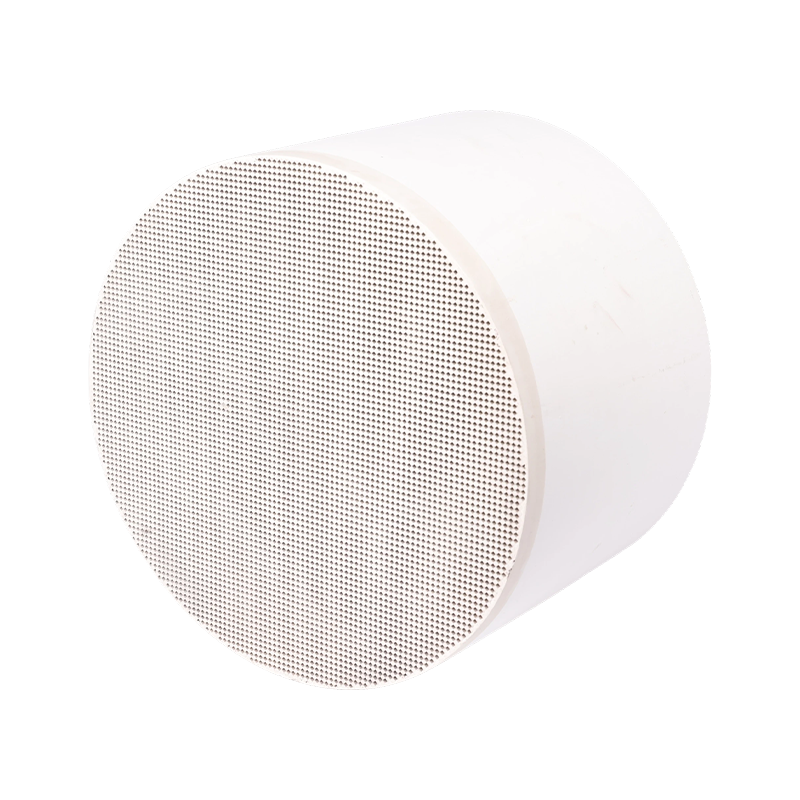 Coated Cordierite Honeycomb DPF CatalystThis catalyzed cordierite carrier offers adjustable wall thickness and cell density, allowing a balance between filtration efficiency and backpressure while providing a stable base for the coating discussion that follows.View Product →
| Carrier material | Typical wall thickness | Practical temperature ceiling | Common applications |
|---|---|---|---|
| Cordierite honeycomb | 8 to 12 mil | Approximately 1,200 °C | On-highway trucks, buses, light commercial vehicles |
| Silicon carbide | 10 to 16 mil | Above 1,400 °C | Off-road equipment, marine propulsion, high-load gensets |
| Metallic substrate | 2 to 5 mil | Approximately 1,100 °C | Space-constrained packages, light-duty applications |
The coating does the chemical work, and here the specification splits into two decisions: what metal system to use and how much to load. Noble-metal formulations based on platinum and palladium deliver strong soot oxidation activity and lower light-off temperatures, which is valuable when duty cycles keep exhaust temperature below 300 °C for long periods. Base-metal systems built on cerium, iron, or mixed oxides cost less and work well when regeneration temperatures are dependable, but they demand tighter control of the washcoat.
Loading determines how fast regeneration begins and how long the catalyst stays active. A typical DPF precious-metal loading is specified in grams per cubic foot or grams per liter, and the target usually starts from the soot-load limit and the lowest expected regeneration temperature. Uniformity matters more than the headline number; a coating with poor axial uniformity will show high backpressure and patchy regeneration even when total loading is correct. For demanding cycles where reliable low-temperature soot oxidation is the priority, our platinum-and-palladium coated DPF catalysts are specified with tight loading tolerances.
 Platinum-Palladium DPF Catalyst for Low-Temperature Soot OxidationThis noble metal formulation delivers strong low-temperature oxidation activity and regeneration response, making it suitable for duty cycles with frequent temperature fluctuations and demanding soot-load limits.View Product →
Two engines with the same displacement can need completely different DPF specifications if one runs a highway route and the other sits in a genset enclosure. Exhaust temperature profile, soot composition, and regeneration frequency drive the coating choice more than any single engine parameter. The table below shows how duty cycle changes the priority order.
| Application | Exhaust temperature pattern | Regeneration behavior | Coating priority |
|---|---|---|---|
| On-highway truck | 250 to 450 °C at cruise, peaks above 550 °C during active regeneration | Active regeneration every few hundred hours | Thermal durability and consistent soot oxidation |
| Off-road and construction | Frequent idle and part-load, cool exhaust for long periods | Passive regeneration unreliable | Low-temperature activity, higher catalyst loading |
| Marine and generator set | Constant speed, repeated cold starts, wet exhaust | Extended low-load operation, slow soot accumulation | Thermal robustness and resistance to poisoning |
Rapid regeneration and thermal shock are the two conditions that push many customers toward silicon carbide. A SiC carrier with a catalyzed coating keeps its structural integrity when temperature gradients are severe. That combination is common in off-road equipment, marine propulsion, and high-load gensets where a cordierite part would be living close to its limit.
 Silicon Carbide DPF Catalyst with High Thermal DurabilityBuilt on a silicon carbide substrate, this catalyst withstands rapid regeneration and thermal shock, making it a robust choice for off-road, marine, or high-load genset applications where cordierite may be insufficient.View Product →
When diesel platforms need both particulate and NOx control, the cleanest packaging is often a single unit that does both. A DPF coated with a selective catalytic reduction layer, usually a copper- or iron-based zeolite, combines soot filtration with NOx conversion and reduces the total volume of the aftertreatment system. This changes the coating specification in a specific way: the catalyst must balance soot oxidation against ammonia storage and NOx reduction over a broad temperature range, instead of optimizing for soot combustion alone. A detailed look at the different SCR chemistries and their application windows is available in our SCR catalyst guide.
A well-scoped inquiry is worth more than any pricing conversation. The fastest path to the right custom DPF solution is to send the operating parameters that define the problem. A complete specification covers at least the following:
Custom DPF work should not feel like a research project. The practical route from specification to production follows a fixed sequence that controls risk at each step.
Coating quality is what makes the sequence repeatable. Washcoat adhesion, loading uniformity, and precious-metal dispersion are the three properties that determine whether the first part matches the hundredth. That is the discipline behind our company's approach to DPF, SCR, and GPF coating work: the production process is validated on samples and then held to the same tolerances throughout the run.
The point of a custom DPF solution is to converge on a specification that works for one application, not to broaden the catalog. If you are mid-way through an aftertreatment project and the numbers are not lining up, the fastest way to find out what is actually possible is to send the specification: exhaust flow, temperature, soot load, and packaging envelope. We can review those inputs, propose a substrate and coating combination, and produce a sample for testing. Our product range is built around exactly this kind of work, so you can compare the main options before you call — browse the catalyst series on our site and see which format matches your project. The goal is simple: a coated DPF that regenerates on schedule, stays within its backpressure budget, and keeps working for the life of the engine.
Content
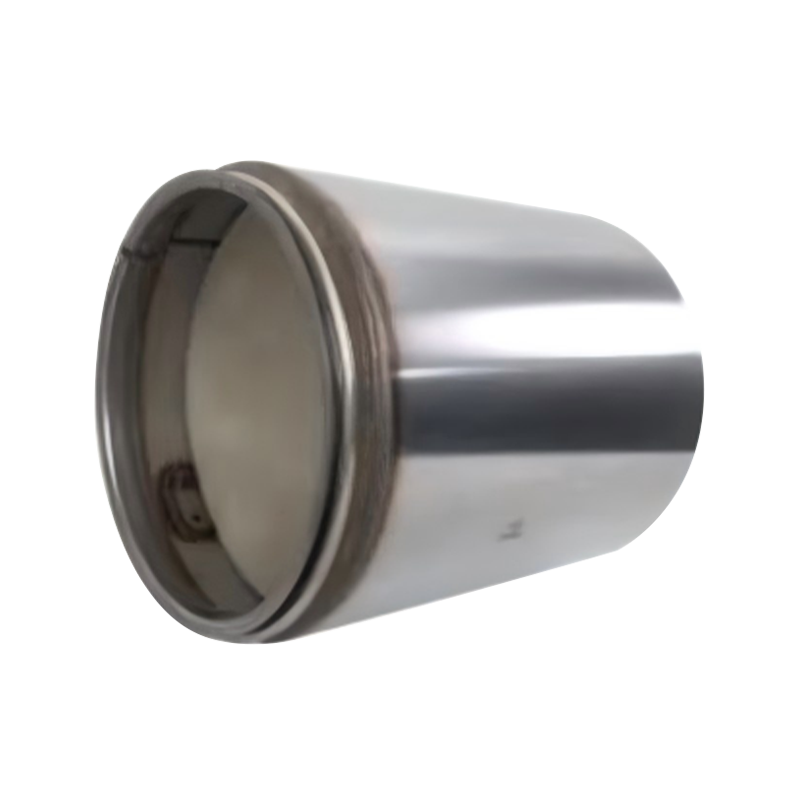
A basic diesel particulate filter (DPF) assembly for heavy-duty diesel trucks needing particulate control.Housing: stainless steel for corrosion resis...
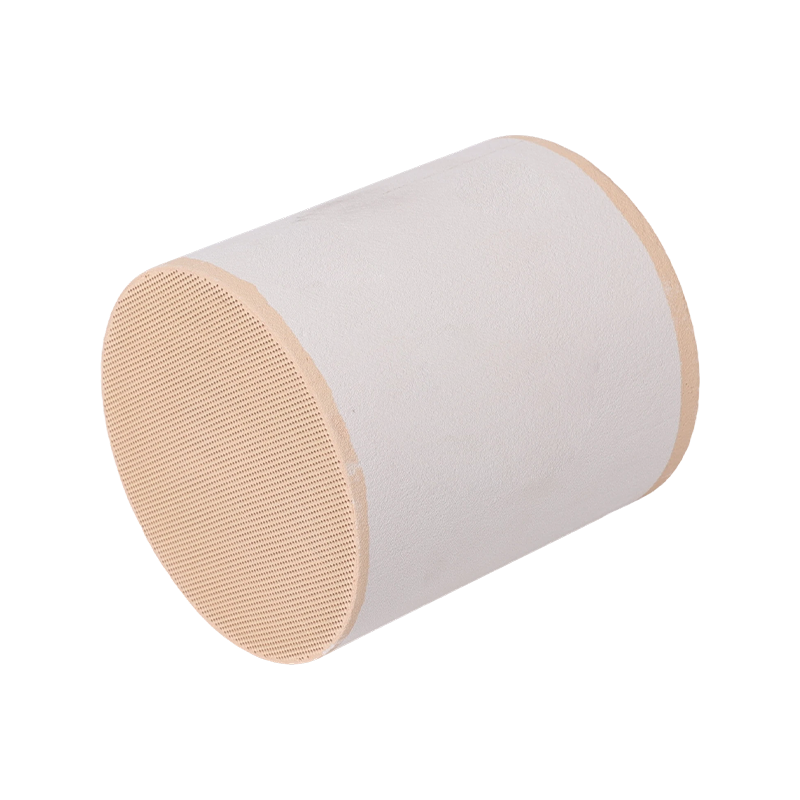
SCRF catalysts integrate SCR functionality directly onto a diesel particulate filter (DPF), combining NOx reduction and particulate filtration into a ...
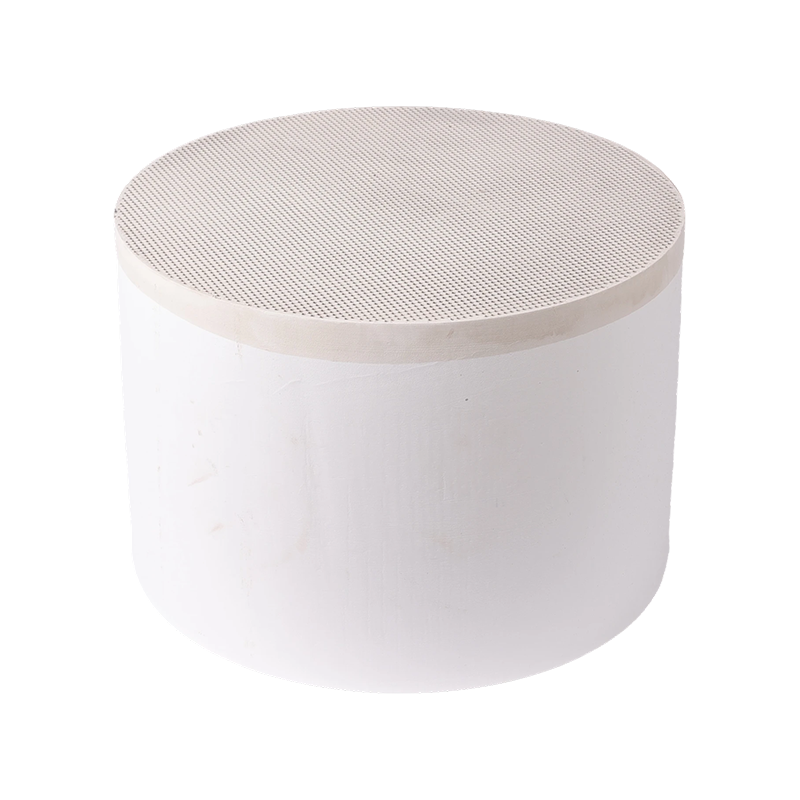
DPF Working Principle: Filtration and RegenerationUnderstanding the DPF requires comprehension of its two core processes:1. Filtration ProcessThe DPF ...
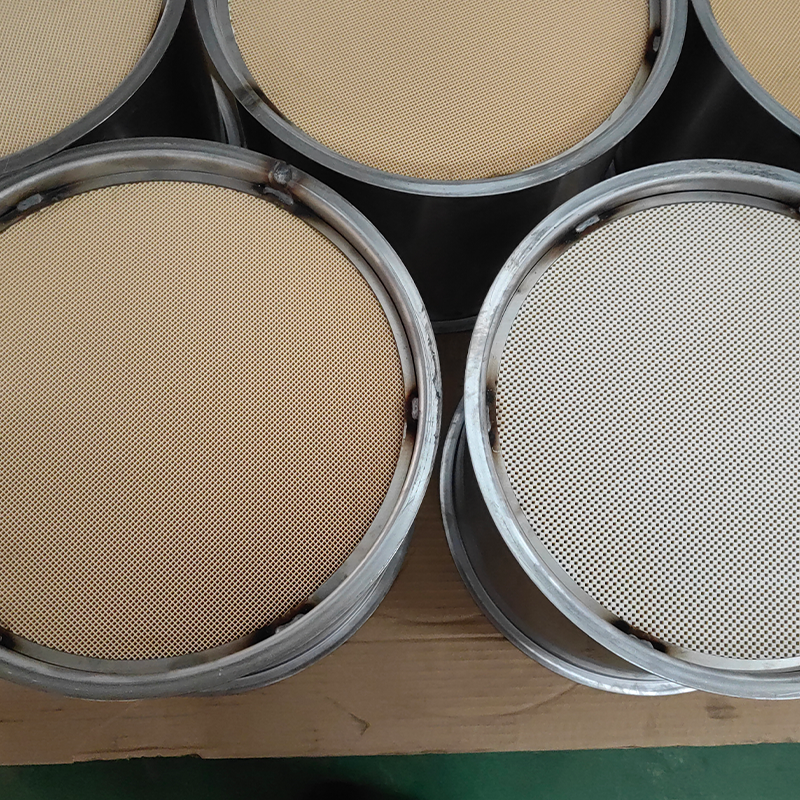
Diesel Particulate Filter (DPF) welded assemblies are critical mechanical modules in the exhaust after-treatment system for achieving efficient partic...
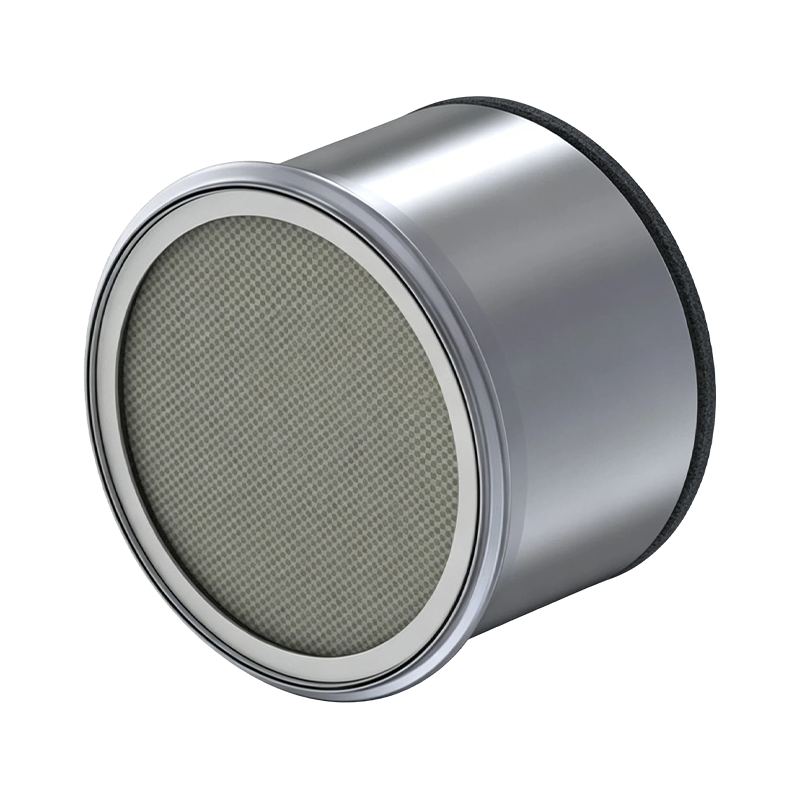
A diesel particulate filter (DPF) sized for larger-displacement heavy-duty trucks that need a higher-capacity soot filter.Filtration: larger ceramic c...
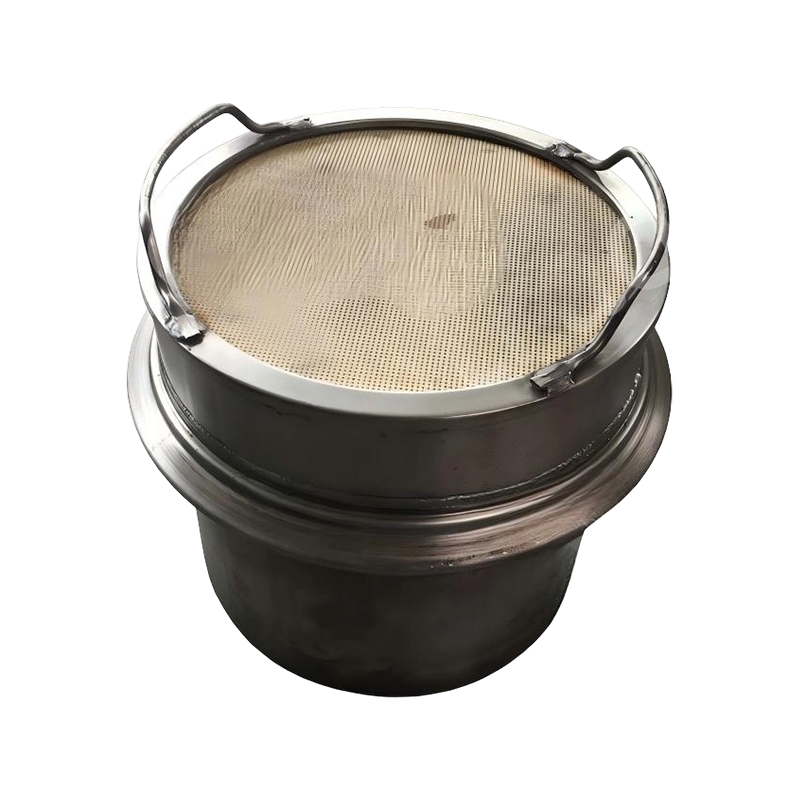
A diesel particulate filter (DPF) element engineered for a wide span of heavy-duty diesel engines used in long-haul and vocational trucks.Endurance: b...
At roughly 600 operating hours, the dash of a compact loader lights up with a derate warning. The t......
READ MOREUnderstanding Emission Control Catalysts Emission control catalysts play a critical role in the aut......
READ MOREEmission control catalysts are the primary technological mechanism used to eliminate toxic environ......
READ MOREA 3.0 L diesel van that rarely pushes its catalyst above 220 °C and a 400 kW standby generator runn......
READ MORESelective Catalytic Reduction (SCR) catalysts are the most widely deployed and technically proven t......
READ MOREA DOC (Diesel Oxidation Catalyst) is a critical emissions control component that reduces harmful pol......
READ MORE