


 English
 русский
 Español
2.2L Direct-Fit Three-Way Catalytic Converter
This product is designed for vehicles equipped with a 2.2L engine and an exhaust system OE number of 53508, applicable to 2003-2004 model years. It is...
A catalytic converter shell is the first thing you see under a vehicle, but its stainless-steel body is easy to underestimate. When the shell cracks, rusts through, or loses its weld integrity, exhaust gases can bypass the catalyst bed, oxygen sensor readings drift, and the converter will fail an inspection even if the substrate is still intact. In this guide, we look at what shell materials actually do, how to recognize shell failure, and why the coated catalyst inside is the component that ultimately determines emission performance.
The shell is not a passive container. It supports the substrate, channels exhaust flow, isolates high temperatures, and provides a mounting envelope for the entire exhaust system. A well-designed shell must tolerate continuous thermal cycling from cold start at 20°C to catalyst operating temperatures above 600°C without warping or losing its sealing pressure.
In practical terms, the shell performs four main functions:
If any of these functions fail, the effect appears as a drop in conversion efficiency or an engine warning light. That is why shell quality matters even though it does not contain any precious metals itself.
Almost all catalytic converter shells are formed from stainless steel, but not all stainless steel behaves the same at exhaust temperatures. Ferritic grades such as 409 are common in OEM exhaust systems because they offer good oxidation resistance at moderate cost. Austenitic grades such as 304 provide higher strength and better corrosion resistance but are more expensive. For severe environments with salt, humidity, or chemical exposure, 316L offers the best chloride resistance.
| Alloy | Common Use | Heat Resistance | Corrosion Resistance | Relative Cost |
|---|---|---|---|---|
| 409 | OEM exhaust and converter shells | Good up to ~650°C | Moderate | Low |
| 441 | High-temperature diesel exhaust | Good up to ~850°C | Good | Low to moderate |
| 304 | Aftermarket shells and marine applications | Good up to ~850°C | Good | Moderate |
| 316L | Coastal, marine, high-chloride environments | Good up to ~800°C | Excellent | High |
Wall thickness also matters. A 1.5 mm shell may be fine for a small gasoline car, but a heavy-duty diesel application often requires 2.0 mm steel to resist vibration and impact. The welding method is equally important: thin shells need controlled MIG or TIG welding to avoid burn-through and to keep the internal flange flat for the gasket seal.
Some converters use a double-shell design with a small air gap or a ceramic fiber blanket between the inner and outer layer. This construction reduces surface temperature and improves catalytic light-off by keeping heat in. When you compare quotes, check whether the shell is a simple single-wall stamping or a thermally insulated assembly, because the difference affects both durability and emission compliance.
Shell failure is often gradual. If you notice a metallic rattle that appears after the converter warms up, the inner heat shield may have separated from the outer shell. A sulfur smell or exhaust noise usually indicates a crack or a failed weld. In many cases, the engine control unit will set a code for the downstream oxygen sensor because outside air is entering through the leak and diluting the exhaust sample.
When a shell can no longer be repaired, most shops replace the entire catalyst assembly. The new shell must match the original mounting angles, pipe diameters, and oxygen sensor positions. A shell that is “close enough” can cause installation stress and lead to premature cracking.
It is easy to focus on the shell because it is visible and replaceable, but the shell does not convert pollutants. The chemical work happens on the washcoat applied to the ceramic or metallic substrate inside. A three-way catalyst, for example, reduces nitrogen oxides, oxidizes carbon monoxide, and oxidizes unburned hydrocarbons in one unit. A diesel oxidation catalyst performs a different job and uses a different coating formulation. You can see the specific mechanism in our guide to diesel oxidation catalysts and how they work.
All that performance depends on the uniformity of the coating, the loading of precious metals, and the adhesion of the washcoat under thermal cycling. An excellent shell cannot fix a poorly coated substrate. Conversely, a damaged shell can ruin a good catalyst by allowing cold air to enter and quench the reaction. Both pieces must be engineered together.
 Three-Way Catalytic Converter with Coated Ceramic SubstrateDesigned for gasoline engines, this TWC simultaneously reduces CO, HC, and NOx. Its coated substrate and shell are engineered together for stable catalytic activity and quick light-off.View Product →
If your application is a gasoline vehicle, the coated unit you need is likely a three-way catalytic converter. The shell size and substrate cell density must be selected together so that exhaust backpressure stays within the engine manufacturer’s limits while the catalyst reaches light-off temperature quickly.
The shell specification is only one part of the selection process. The catalyst inside must match the engine type, fuel, emission standard, and available space. In our experience, buyers should start with the coating chemistry, then choose a shell that protects it.
For motorcycles and small engines where space is tight, a metallic substrate is often the better choice. The thin metal foil channels allow a shorter and lighter catalyst package while still providing the same geometric surface area.
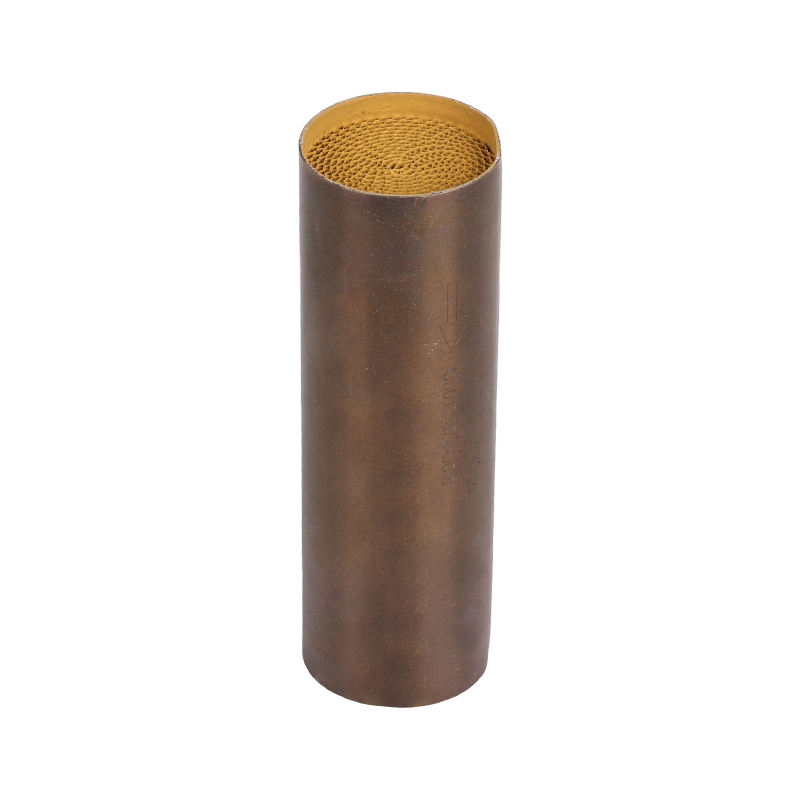 Compact Metallic Substrate Catalyst for Small EnginesUsing thin alloy foil channels, this catalyst offers rapid light-off, low back pressure, and durability in tight spaces. Suitable for motorcycle and small-engine exhaust rebuilds.View Product →
For shops that rebuild exhaust systems, a monolithic catalyst welded piece can be ordered with the appropriate outlet size and flange configuration. This approach makes it easier to replace a rusty shell without replacing the entire exhaust line.
Before you specify a part, compare the operating temperature range, the maximum exhaust flow, and the required conversion efficiency. That data, not the thickness of the steel alone, determines whether the converter will pass an emissions test.
Catalytic converter shells deserve attention because they protect an expensive catalyst and must survive decades of thermal and mechanical stress. Yet the shell is only an envelope. The emissions reduction comes from the coating on the substrate inside. When you choose a supplier, look for one that understands both sides: robust shell construction and properly formulated catalyst coating. That combination is what keeps the exhaust clean and the warranty valid.
Content
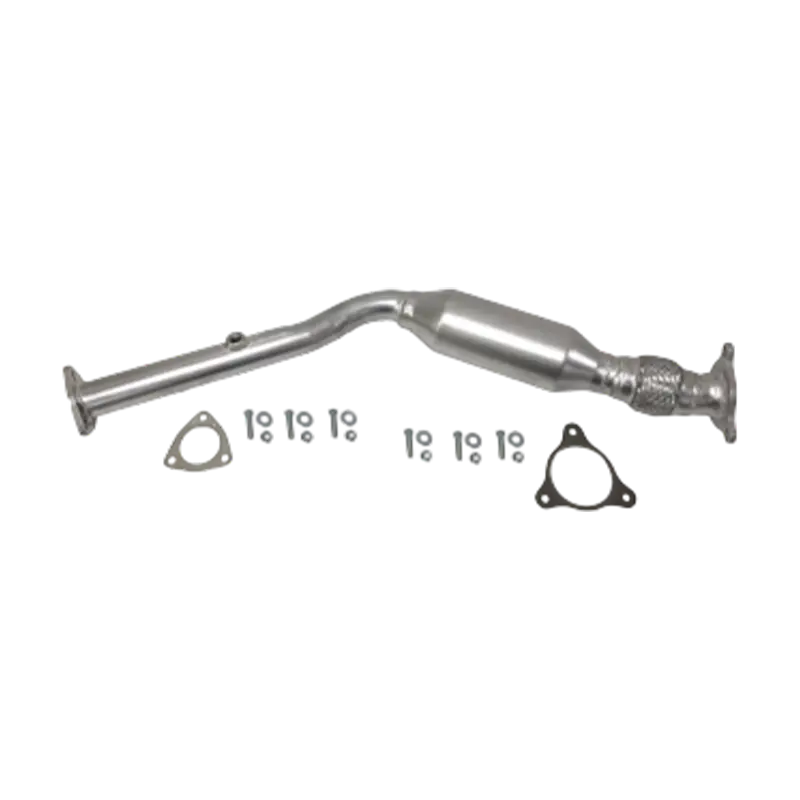
This product is designed for vehicles equipped with a 2.2L engine and an exhaust system OE number of 53508, applicable to 2003-2004 model years. It is...
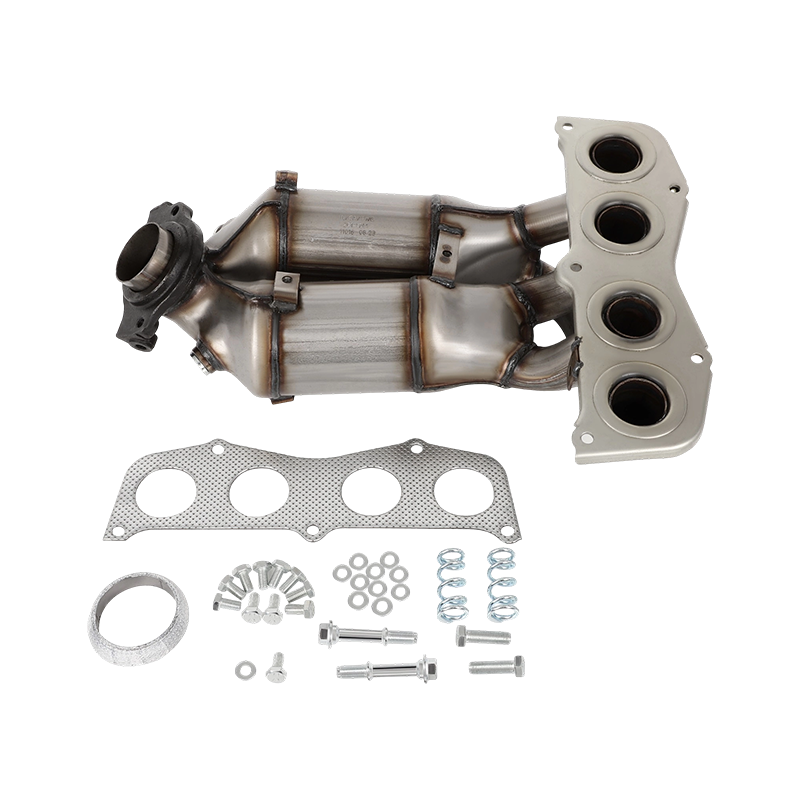
This product is designed for vehicles with an exhaust system OE number of 40583, applicable to 2001-2003 model years. It is an integrated assembly com...
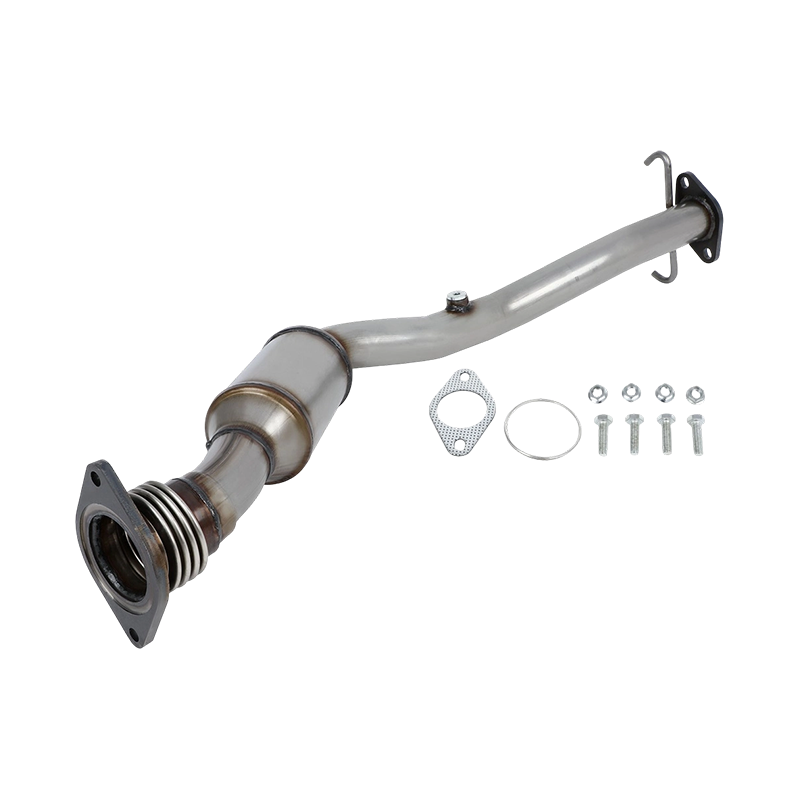
This product is designed for vehicles equipped with a 3.8L engine and an exhaust system OE number of 54752, applicable to 2004-2008 model years. It is...
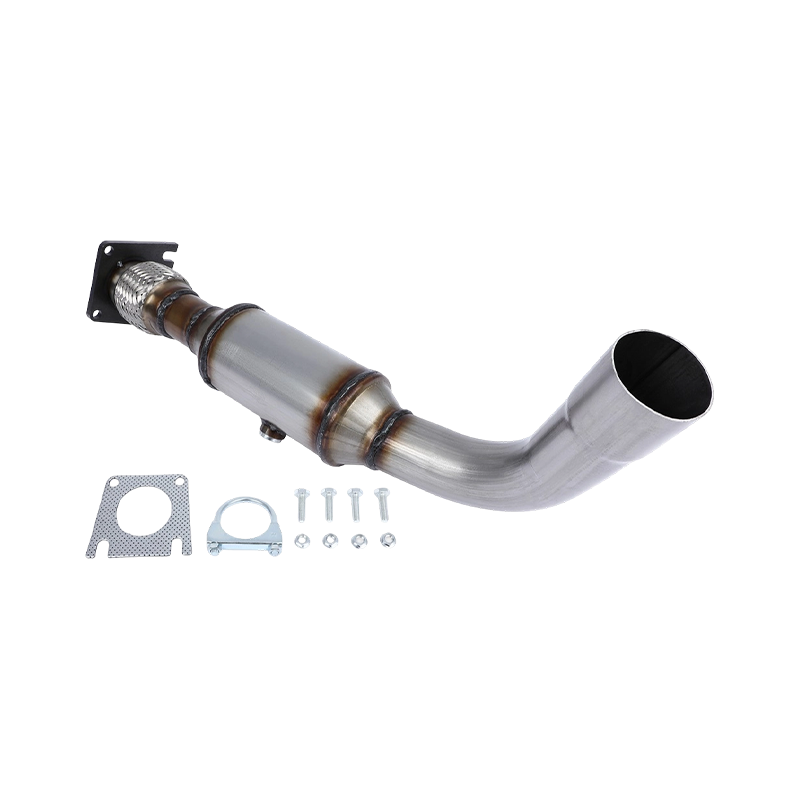
This product is designed for vehicles equipped with a 3.8L engine and an exhaust system OE number of 42912, applicable to 2008-2010 model years. It is...
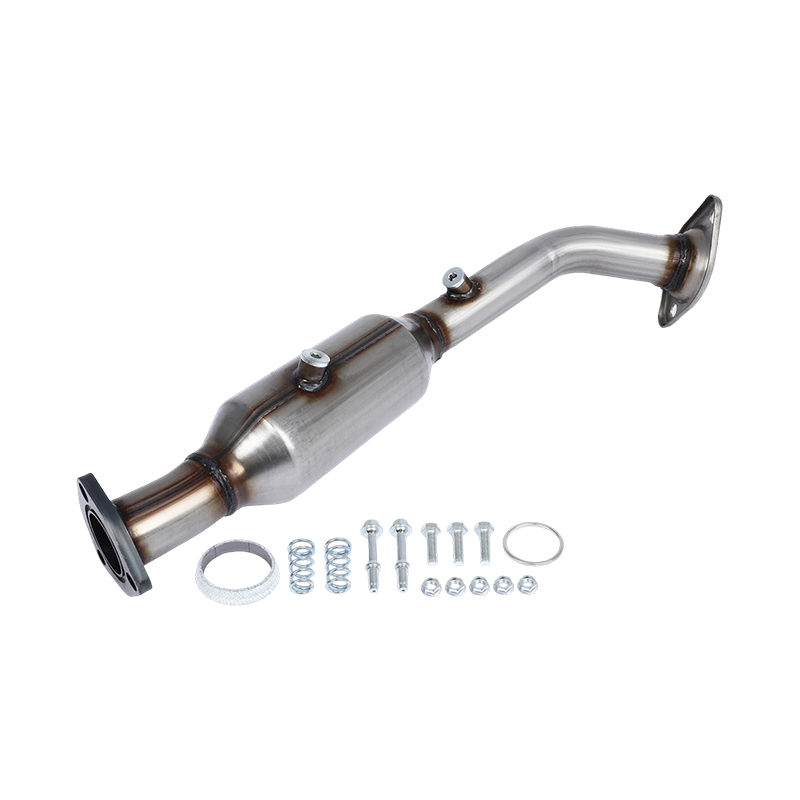
This product is designed for vehicles equipped with a 2.0L base configuration engine and an exhaust system OE number of 53583, applicable to 2002-2006...
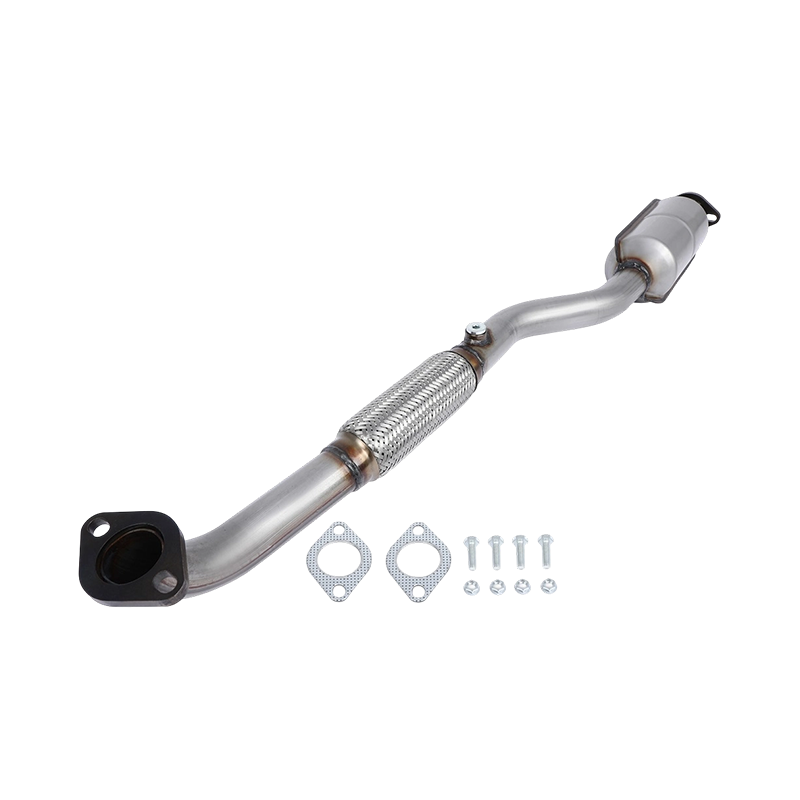
This product is designed for vehicles equipped with a 2.0L engine and an exhaust system OE number of 54774, applicable to 2004-2006 model years. It is...
When an exhaust system integrator or procurement engineer evaluates a catalytic converter, the firs......
READ MOREIf your diesel engine suddenly loses power while the exhaust smells raw and oily, the problem may b......
READ MOREEvery gasoline engine that meets modern emission standards depends on a component most drivers neve......
READ MOREExhaust System Components The shell rarely fails first — but when it does, everything inside it goe......
READ MOREEmissions Control / Comparison A three-way catalytic converter is the correct choice for any spark......
READ MOREAsk a diesel technician who has chased an intermittent DPF regeneration fault, and you will hear th......
READ MORE