


 English
 русский
 Español
Three-Way Catalytic Converter with Exhaust Manifold Assembly
This product is designed for vehicles with an exhaust system OE number of 40583, applicable to 2001-2003 model years. It is an integrated assembly com...
Every gasoline engine that meets modern emission standards depends on a component most drivers never see: the three-way catalytic converter (TWC). Once the engine reaches operating temperature, this single unit becomes responsible for converting three harmful exhaust gases into less harmful substances. Carbon monoxide, unburned hydrocarbons, and nitrogen oxides are all processed within the same catalytic bed. The efficiency of that conversion, however, is not guaranteed by the presence of the converter alone. It depends on the precise chemical makeup of the catalyst coating and the operating conditions under which the converter is used.
Understanding how a three-way catalytic converter works starts with the reactions inside it. In a properly tuned gasoline engine, exhaust gas contains measurable amounts of carbon monoxide (CO), unburned hydrocarbons (HC), and nitrogen oxides (NOx). The catalyst promotes two oxidation reactions and one reduction reaction at the same time. CO oxidizes to carbon dioxide. HC oxidizes to water vapor and carbon dioxide. NOx is reduced to nitrogen. Because all three pollutants are handled in one catalytic system, the device is called a three-way converter.
Performance relies heavily on the precious metal formulation. Platinum and palladium act as oxidation catalysts, converting CO and HC. Rhodium handles NOx reduction. The relative amounts of these metals, together with the rare earth and base metal additives used in the washcoat, determine how effectively the converter carries out these reactions under real driving conditions. Longyou Shuochun New Material Technology Co., Ltd. applies these principles to produce a range of three-way catalytic converters with precisely adjusted rare earth, precious metal, and base metal ratios to achieve stable catalytic activity.
 Three-way catalytic converters with tuned precious metal and rare earth ratiosThis converter range is designed for gasoline engines, using balanced platinum, palladium, and rhodium alongside rare earth additives to achieve stable catalytic activity across varied operating conditions.View Product →
The chemical reactions require a specific air-fuel ratio. The stoichiometric point, often called lambda equals 1, represents the theoretical ideal where all fuel is burned with all available oxygen. The widest conversion efficiency window sits within about 0.5 percent of this point. Lean mixtures cause NOx conversion to drop quickly. Rich mixtures make CO and HC oxidation incomplete. Modern engine management systems with closed-loop oxygen sensors continuously adjust fuel delivery to keep the exhaust mixture within this narrow window, preserving low emissions across the drive cycle.
A three-way catalytic converter is more than a metal canister with a honeycomb inside. Emission control performance comes from three functional layers.
Ceramic substrates dominate passenger car applications because of their low thermal expansion and robust durability. Metallic substrates offer higher cell density and faster heat-up, which can be valuable in motorcycles, racing engines, and compact exhaust layouts. For example, precious-metal metallic substrates designed to Euro 6 standards combine a dense honeycomb structure with a carefully tuned noble metal load to handle demanding emission targets.
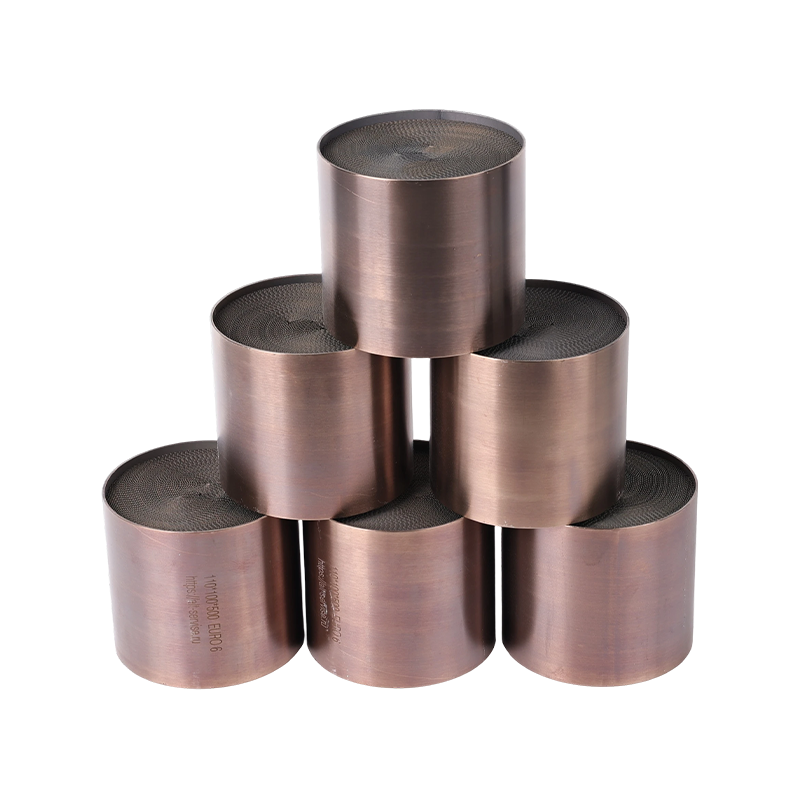 Euro 6 metallic substrate with high precious metal load for fast light-offThis metallic honeycomb substrate features thin Fe-Cr-Al foil and a dense noble metal coating, enabling rapid warm-up and effective emission reduction for Euro 6 applications.View Product →
Even a well-designed TWC loses conversion efficiency as it ages. The most common form of degradation is thermal sintering. Sustained temperatures above 900 degrees Celsius can cause precious metal particles to grow, shrinking the active surface area available for catalytic reactions. This is why converter placement and exhaust heat management matter in real installation work.
Chemical poisoning also plays a role. Phosphorus and zinc from engine oil, sulfur in fuel, and some fuel additives can block active sites on the catalyst surface. Rare earth stabilizers in modern washcoats help resist this contamination, extending the operating life of the converter.
One practical point for installers: if a converter is exposed to a faulty ignition system or a lean fuel mixture for an extended period, the catalytic coating may overheat and crack. For that reason, replacing the converter without solving an underlying engine misfire or fuel trim problem will often result in a short service life for the new part.
Selecting a three-way catalytic converter requires more than matching the external dimensions. Several factors determine whether a converter will perform reliably in a given installation.
In systems where the catalyst element and housing are integrated, TWC welded pieces simplify installation and reduce the risk of loose components inside the exhaust path.
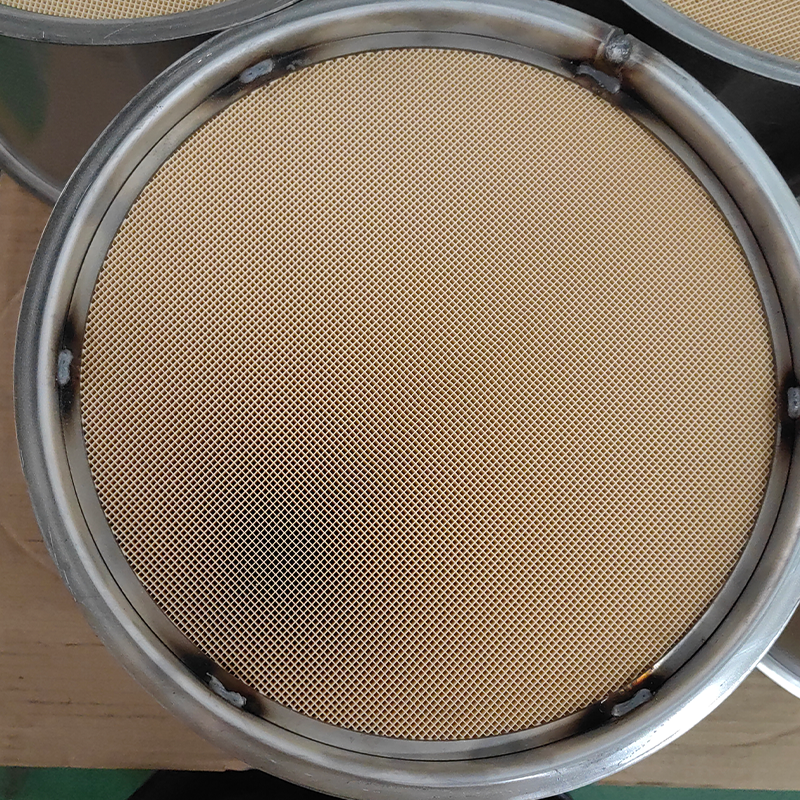 Welded three-way catalyst assembly for integrated exhaust installationThis pre-assembled TWC unit combines catalyst shell, substrate, mat, and pipes into one module, simplifying fitment and ensuring secure, leak-free placement within the exhaust system.View Product →
Environmental and operating conditions also matter. Vehicles used in stop-and-go city traffic experience different thermal profiles than those used mainly on highways. Choosing a converter with an appropriate light-off temperature and adequate precious metal load for the expected use case is a more reliable strategy than assuming one design fits all installations.
Three-way catalytic converters are not limited to passenger cars. Motorcycles and scooters with spark-ignition engines use TWCs to meet increasingly tight emissions regulations. Small utility engines, portable generators, and certain industrial equipment are also fitted with TWCs when the exhaust aftertreatment path calls for simultaneous CO, HC, and NOx control.
More broadly, the same catalytic principles apply to other parts of an emission control system. For a different side of the aftertreatment challenge, this SCR catalyst guide describes how selective catalytic reduction handles NOx in diesel exhaust, a useful comparison when designing or troubleshooting a complete emissions system.
At the point of purchase, the most useful approach is to evaluate the catalyst formulation, substrate type, and installation requirements together. A three-way catalytic converter is a precision component whose service life depends on how well it is matched to the engine and the emission standard it is meant to satisfy.
Content
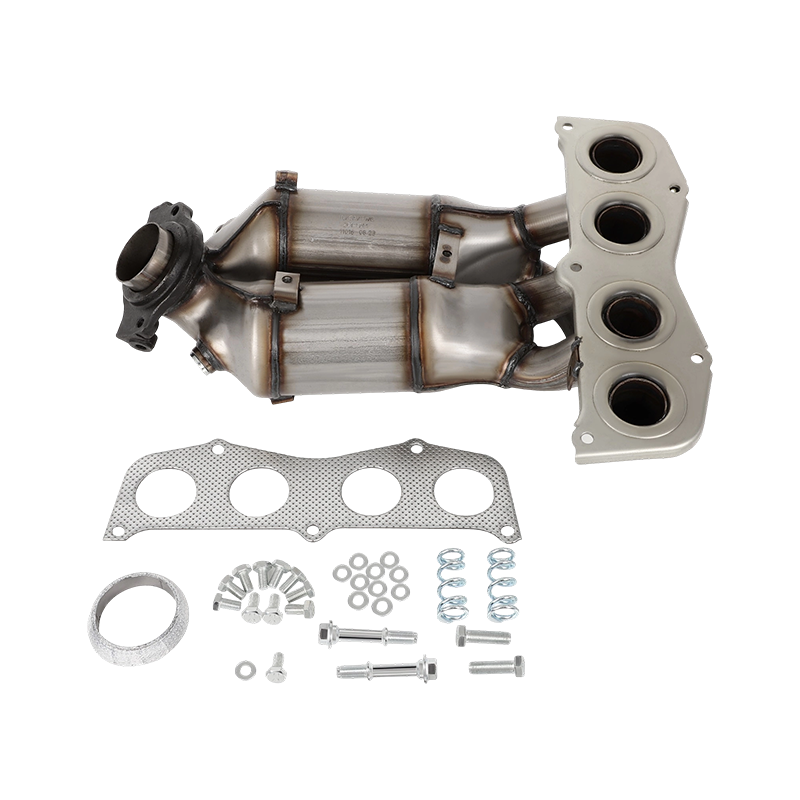
This product is designed for vehicles with an exhaust system OE number of 40583, applicable to 2001-2003 model years. It is an integrated assembly com...
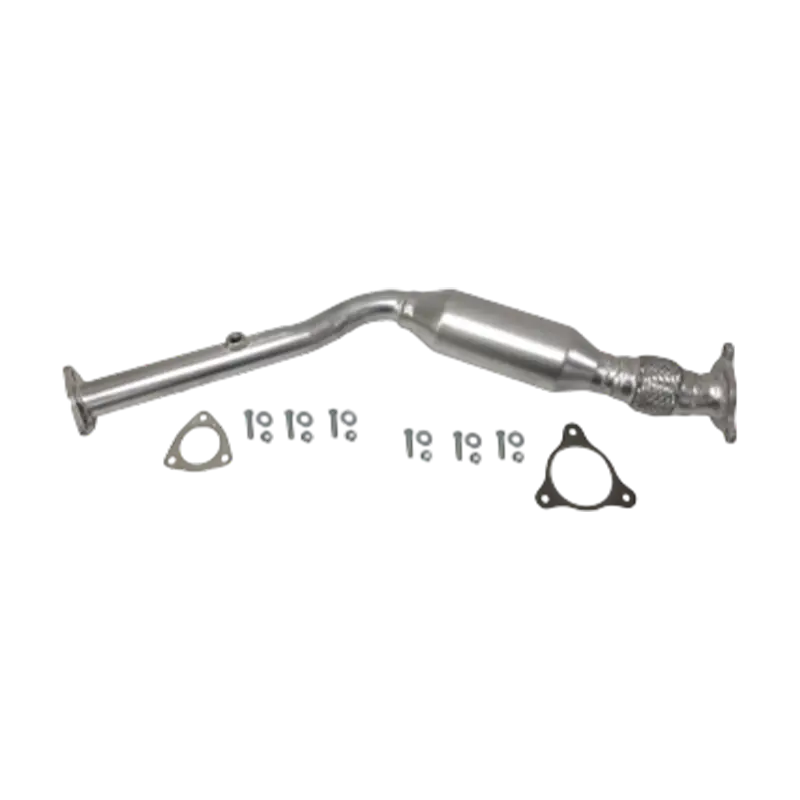
This product is designed for vehicles equipped with a 2.2L engine and an exhaust system OE number of 53508, applicable to 2003-2004 model years. It is...
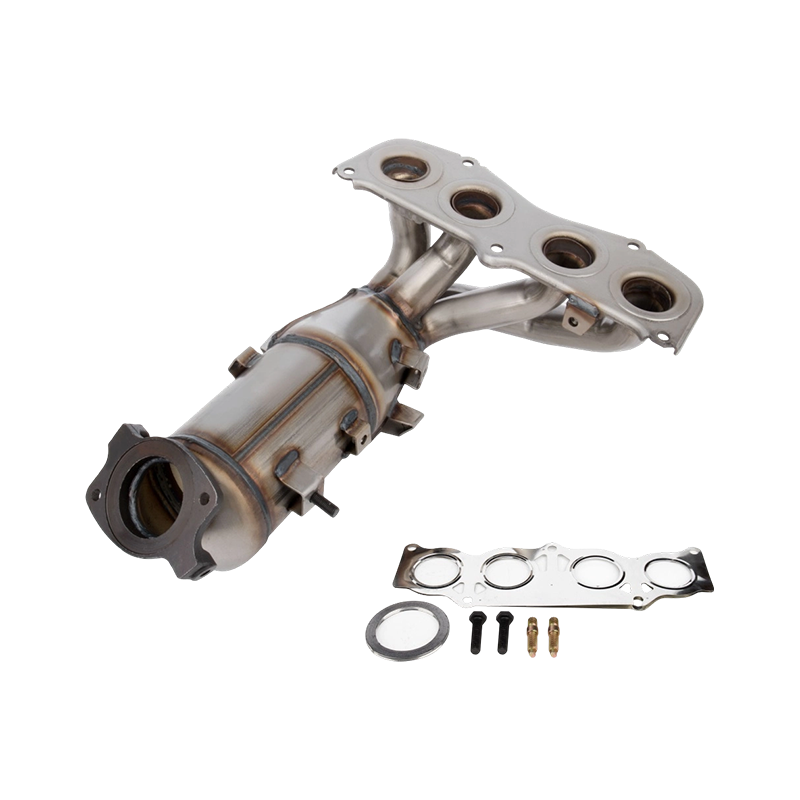
This product is designed for vehicles equipped with a 2.4L engine and an exhaust system OE number of 674-811, applicable to 2002-2009 model years. It ...
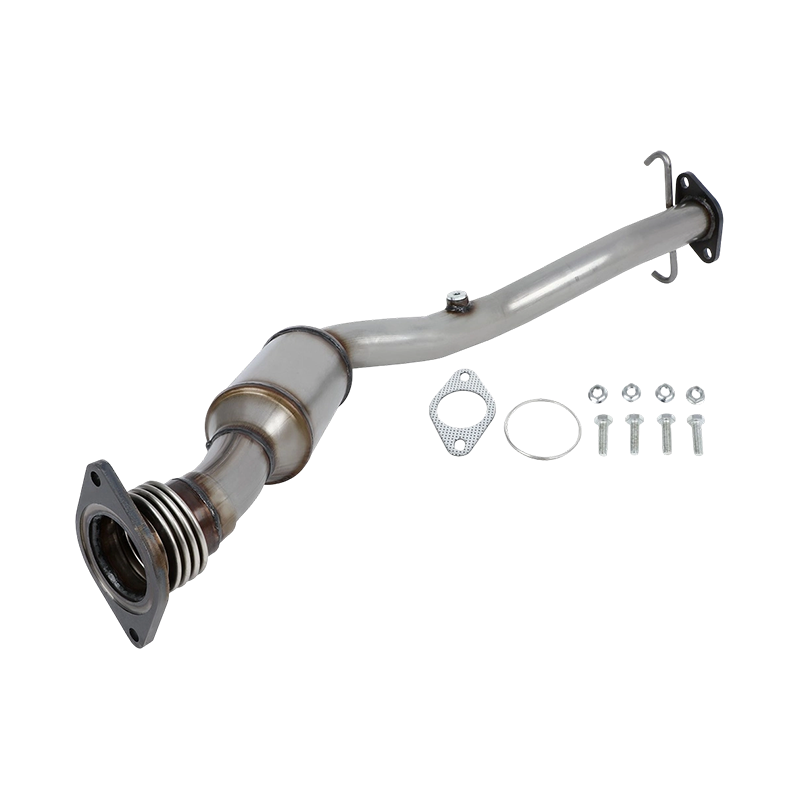
This product is designed for vehicles equipped with a 3.8L engine and an exhaust system OE number of 54752, applicable to 2004-2008 model years. It is...
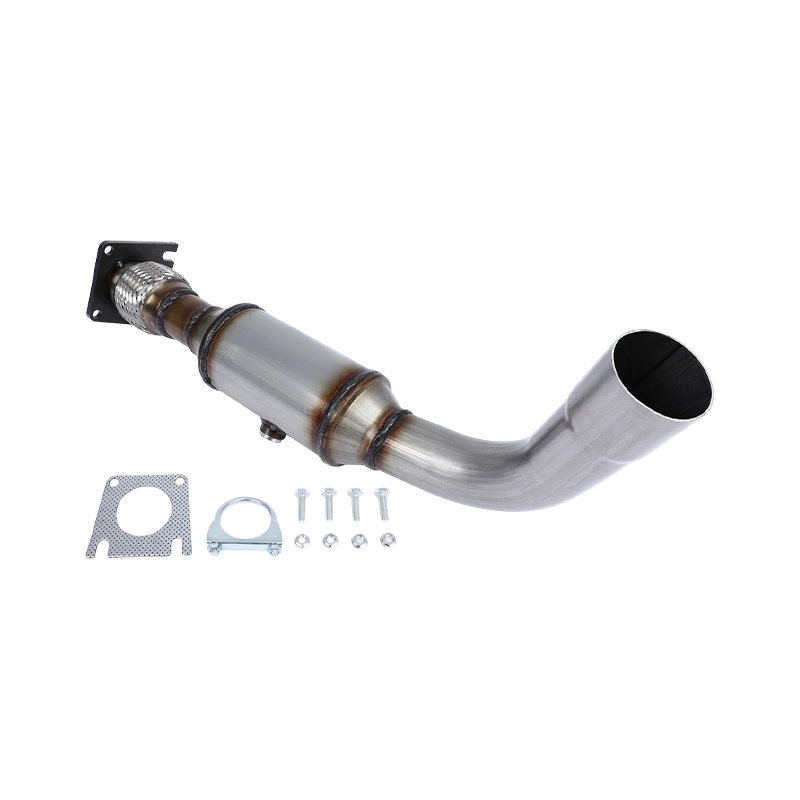
This product is designed for vehicles equipped with a 3.8L engine and an exhaust system OE number of 42912, applicable to 2008-2010 model years. It is...
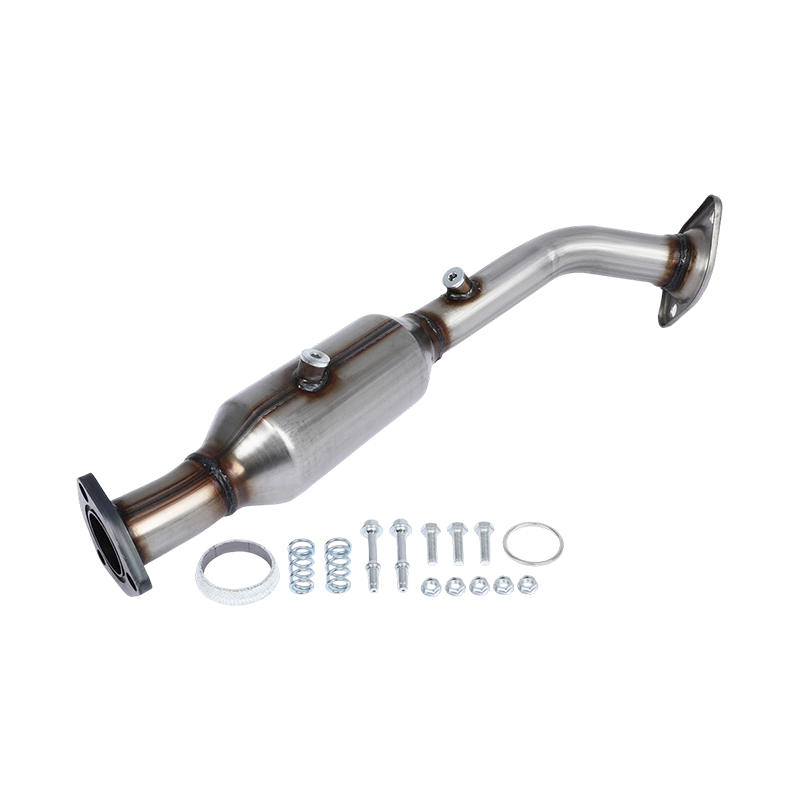
This product is designed for vehicles equipped with a 2.0L base configuration engine and an exhaust system OE number of 53583, applicable to 2002-2006...
Emissions Control / Comparison A three-way catalytic converter is the correct choice for any spark......
READ MOREThree-Way Catalytic Converters: Essential Emission Control Devices Three-way catalytic converters a......
READ MOREA catalytic converter shell is the first thing you see under a vehicle, but its stainless-steel bod......
READ MOREWhen an exhaust system integrator or procurement engineer evaluates a catalytic converter, the firs......
READ MOREUnderstanding Emission Control Catalysts Emission control catalysts play a critical role in the aut......
READ MOREIf your diesel engine suddenly loses power while the exhaust smells raw and oily, the problem may b......
READ MORE