


 English
 русский
 Español
2.2L Direct-Fit Three-Way Catalytic Converter
This product is designed for vehicles equipped with a 2.2L engine and an exhaust system OE number of 53508, applicable to 2003-2004 model years. It is...
When an exhaust system integrator or procurement engineer evaluates a catalytic converter, the first component that gets specified is usually the washcoated substrate. But the part that physically connects that substrate to the exhaust line, protects it from vibration and thermal shock, and determines whether the whole assembly survives 100,000 miles of road salt, heat cycling, and mechanical abuse is the catalytic converter shell. If the shell geometry is wrong, the substrate cracks. If the weld leaks, emissions bypass the catalyst. If the material is under-specified, corrosion perforates the housing long before the precious metals deactivate.
This guide explains what a converter shell actually does, how its material and manufacturing choices affect durability, and exactly what technical parameters to send a manufacturer when you need a custom catalytic converter shell for an OEM or aftermarket program.
The catalytic converter shell is the outer metal housing that encloses the catalyst substrate, which is typically a ceramic honeycomb or a metallic foil structure. It performs three functions at the same time:
Catalytic converters have been standard equipment on passenger vehicles in the U.S. market since 1975, when EPA regulations first mandated emission controls. In modern gasoline engines, the shell must tolerate a typical operating temperature range of 400 to 900°C during normal driving, with occasional spikes above that during high-load conditions or regeneration events. Over the same operating period, the shell must accommodate the difference in thermal expansion between the metal housing and the ceramic substrate, which is why a cushioning mat is always placed between the two. A correctly engineered shell is therefore not just a container; it is a structural component that directly influences the service life and regulatory compliance of the entire emission control system.
A complete catalytic converter shell assembly is not a single stamped piece of metal. It is a welded assembly made from several formed parts, each serving a specific purpose.
The main cylindrical or oval body that wraps the substrate. Its inner diameter must be matched to the outer diameter of the substrate, plus the thickness of the mounting mat and a controlled compression clearance. For ceramic substrates with a 118.4 mm outer diameter, for example, the shell inner diameter is typically sized to achieve a specific mat density after canning, usually in the range of 0.4 to 0.7 g/cm². This clearance is one of the most critical design dimensions in the entire assembly.
These are the tapered inlet and outlet sections that transition from the shell body to the exhaust pipe diameter. The cone angle affects exhaust flow distribution across the substrate face. An overly aggressive angle creates uneven flow and increased backpressure.
A separate metal cover, usually with an air gap, that reduces underbody temperatures and protects surrounding components from radiated heat.
Flanges with studs or clamps connect the assembly to the exhaust system. Mounting brackets carry the weight of the converter and isolate it from excessive vibration.
When you purchase a welded component from a catalyst manufacturer, such as a monolithic catalyst welded assembly, you are buying the complete package: shell, cones, flanges, and mounting hardware. The inner diameter tolerance and the concentricity of the shell body relative to the cones are what determine whether the assembled converter can be installed without additional shimming.
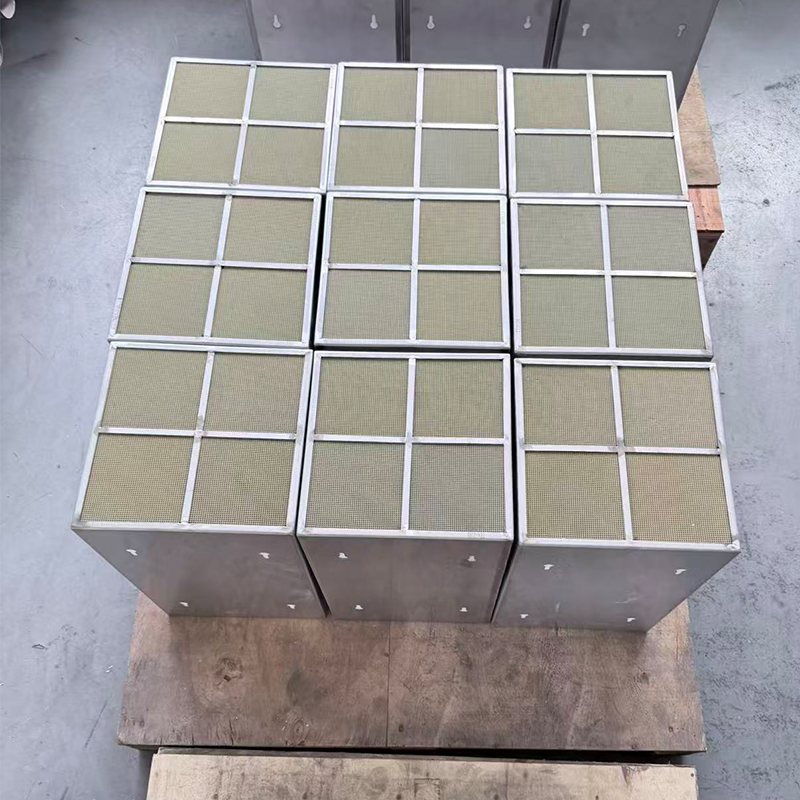 Wholesale Monolithic Catalyst Welded Piece Factory, Suppliers - Longyou ShuochunLongyou Shuochun New Material Technology Co., Ltd is China wholesale Monolithic Catalyst Welded Piece suppliers and Monolithic Catalyst W...View Product →
Selecting the right catalytic converter shell material is a trade-off between corrosion resistance, temperature tolerance, cost, and expected service life. There is no universally correct material, but there are clear application-based guidelines.
| Material | Temperature Limit | Corrosion Resistance | Relative Cost | Best Suited For |
|---|---|---|---|---|
| 409 stainless steel | ~850°C continuous | Good in exhaust condensate and road salt | Moderate | Passenger cars, light trucks, most on-road applications |
| 304 stainless steel | ~900°C continuous | Excellent general corrosion resistance, good pitting resistance | High | High-temperature applications, marine environments, off-road equipment |
| Aluminized steel | ~650°C effective | Good initially, degrades as the aluminum coating oxidizes | Low | Cost-sensitive programs, non-road machinery, short-life applications |
For on-road vehicles, 409 stainless steel is the industry default. It contains roughly 11% chromium, which provides sufficient oxidation resistance at exhaust temperatures and good resistance to the acidic condensate that forms inside a cold exhaust system. For high-temperature or highly corrosive environments, 304 stainless steel adds nickel and more chromium, which improves both strength at temperature and resistance to pitting from road salt. This is why many heavy-duty and marine applications specify 304.
Aluminized steel is a cost-effective alternative, but its working life is limited by the sacrificial aluminum coating. Once the coating diffuses or oxidizes away under sustained heat, the base steel corrodes quickly. It remains a practical choice for low-cost equipment with a defined service life, such as certain construction machinery or generator sets where exhaust temperatures rarely hold above 600°C.
The regulatory trend matters here. Stricter standards such as Euro 6 require catalysts to maintain conversion efficiency over extended durability periods, which pushes OEMs toward higher-grade stainless steel shells. A Euro 6 standard metallic substrate also demands a shell material that can handle the higher temperature stability of metal foil substrates without corrosion or scaling. If your program targets Euro 6, plan for a stainless steel shell rather than aluminized steel.
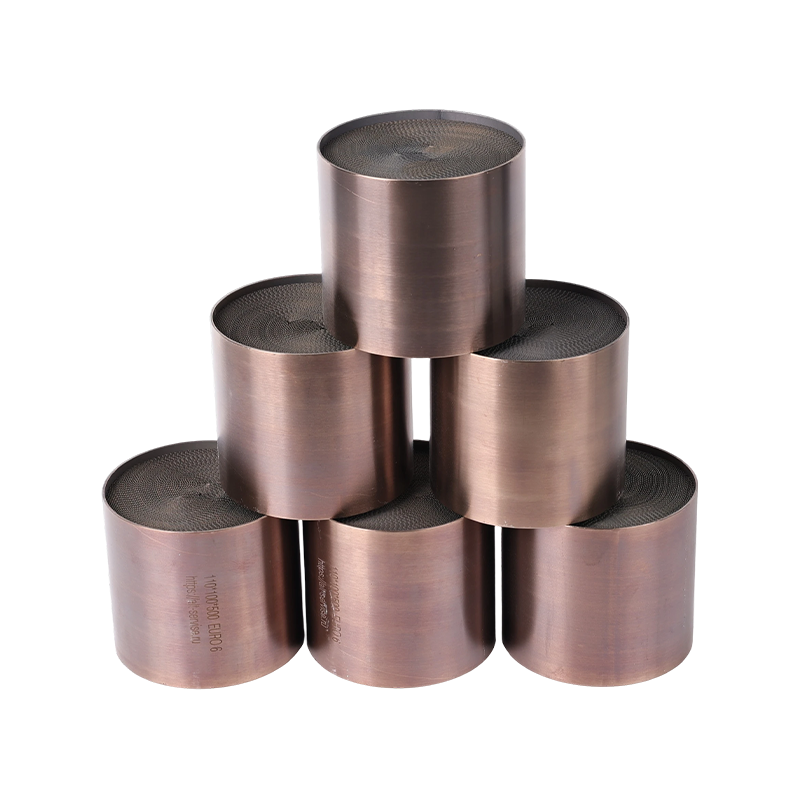 Wholesale High precious metal content metallic substrate – Euro 6 standard FactoLongyou Shuochun New Material Technology Co., Ltd is China wholesale High precious metal content metallic substrate – Euro 6 standard sup...View Product →
The shell is not designed in isolation. It must be engineered around the specific substrate type, which is the ceramic or metallic honeycomb core. The integration method differs significantly depending on that choice.
Ceramic substrates, such as cordierite, are rigid but brittle. They expand far less than the steel shell under heat. To hold them safely, an intumescent or non-intumescent mat is wrapped around the substrate, and the wrapped package is then pressed or pulled into the shell. The mat applies even compression that secures the substrate under vibration and accommodates the difference in thermal expansion. The shell must therefore have a precisely controlled inner circumference and a clean internal surface, free of weld spatter or burrs that could tear the mat during assembly.
Metallic substrates, made from corrugated and flat metal foil, are more ductile and can survive mechanical fixation. They are often welded directly to the shell body or held with a tight interference fit. This design eliminates the mat and improves heat transfer, but it means the shell must match the thermal expansion of the metallic core closely. If the shell expands more than the core, the substrate loosens; if it expands less, the substrate buckles. The supplier must know the substrate material grade and cell density to select a shell thickness and material that move together thermally.
The shell also interacts with the coating process. A washcoated substrate changes dimension slightly because the active coating adds a thin layer to the channel walls. If the shell is sized for an uncoated substrate, the coated unit may have a higher mat compression than intended, increasing the risk of cracking during thermal cycling. For this reason, a three-way catalytic converter assembly should always be sized based on the finished, washcoated substrate dimensions, not the bare substrate dimensions. When the same manufacturer performs both coating and shell assembly, this mismatch is easy to control.
 Custom Three-Way Catalytic Converter Manufacturers, SuppliersLongyou Shuochun New Material Technology Co., Ltd. is China automotive three-way catalyst manufacturers and custom three-way catalytic ca...View Product →
The manufacturing route for a converter shell depends on its shape and volume. Understanding the process helps you evaluate supplier capability and inspect quality at the right checkpoints.
High-volume, round or oval shells are formed by stamping, often in two halves that are longitudinal-welded together, or by drawing a cup that is then trimmed. Stamping provides tight dimensional repeatability, which is essential when many identical units are assembled on a single line.
For smaller quantities or custom diameters, a flat sheet is rolled into a cylinder and closed with a longitudinal seam weld. Then the cones, flanges, and brackets are added via circumferential welding. Rolled shells are more flexible in diameter and length, making them the standard approach for customized catalyst elements.
The key dimensional and integrity features are straightforward, but each requires a specific inspection method:
When you choose a supplier who performs both shell forming and final assembly welding, you shorten the feedback loop between shell dimensions and assembly results. A TWC welded component manufacturer that welds the shell, cones, and flanges in one facility can correct tolerance issues during production rather than finding them after the units arrive at your own assembly plant.
Even a well-engineered converter shell can fail in service. Recognizing the failure modes matters because the repair strategy differs depending on whether the shell or the substrate is the damaged part.
When a shell fails, the exhaust noise increases, and you may smell raw exhaust under the vehicle. If the damage is a simple leak near the shell body but the substrate remains intact, replacing only the shell assembly is far more economical than replacing the entire converter. OEM replacement converters can be extremely expensive, with some vehicle owners reporting costs above $4,700 per side on certain platforms. Sourcing a standalone shell weldment as a service part is often a practical alternative.
However, if the failure originated because the substrate collapsed or partially blocked, the converter needs a full replacement. In that case, you need the complete catalyst assembly, not just the shell. If the shell failed due to mechanical impact, inspect the substrate for cracks before reusing it. In most corrosion-driven failures, the catalyst may still be chemically active, meaning a TWC welded component that bundles a new shell with a replacement catalyst is the cleaner solution.
A vague request for a catalytic converter shell guarantees a slow and imprecise quotation. The faster you can specify the full assembly context, the more accurate the supplier's pricing and lead time will be. At minimum, provide the following:
If you are sourcing from a catalyst manufacturer that also supplies complete catalyst components, you can simplify the process further, as with TWC welded component options that include the shell, catalyst, and mounting features in one part number.
Generator set applications illustrate the need for specification clarity. Large stationary units and small mobile units place very different thermal and vibrational demands on the shell. A shell that works on a 1000 kW generator with a heavy-duty silencer will be radically different from one used on a 20 kW backup set, both in diameter and in material thickness. The more precisely you define the operating point, the more closely the shell and catalyst performance can match the application.
The distinction between buying a shell from a pure sheet metal fabricator and buying it from a catalyst manufacturer matters more in practice than it might appear on paper.
When one supplier performs substrate selection, catalytic coating, canning, and shell welding, the dimensional tolerance chain is closed within a single quality system. The washcoated substrate's final diameter, the mat compression, and the shell inner diameter are managed as one design. If a problem appears in assembly, there is no dispute about who owns the tolerance. This reduces the engineering time spent reconciling datasheets from multiple vendors.
Shipping a bare substrate to one location for coating and then to a metal shop for canning adds both logistics cost and handling damage risk. Consolidating those steps shortens lead time and lowers inventory buffer requirements.
An emission standard like Euro 6 is not a property of the substrate alone. The catalyst, shell, mat, and mounting must work as a system to maintain conversion efficiency for the required durability period. A manufacturer who builds the complete assembly can run or coordinate the relevant validation tests and document that the specific combination of shell and coated substrate meets the standard.
For an OEM or an exhaust system integrator, the practical implication is this: ask your supplier whether they can supply the entire catalyst package, from substrate and coating to the welded shell assembly. When that capability exists, the shell stops being a separate sourcing item and becomes part of a single accountable component, which is usually the better engineering decision.
Content
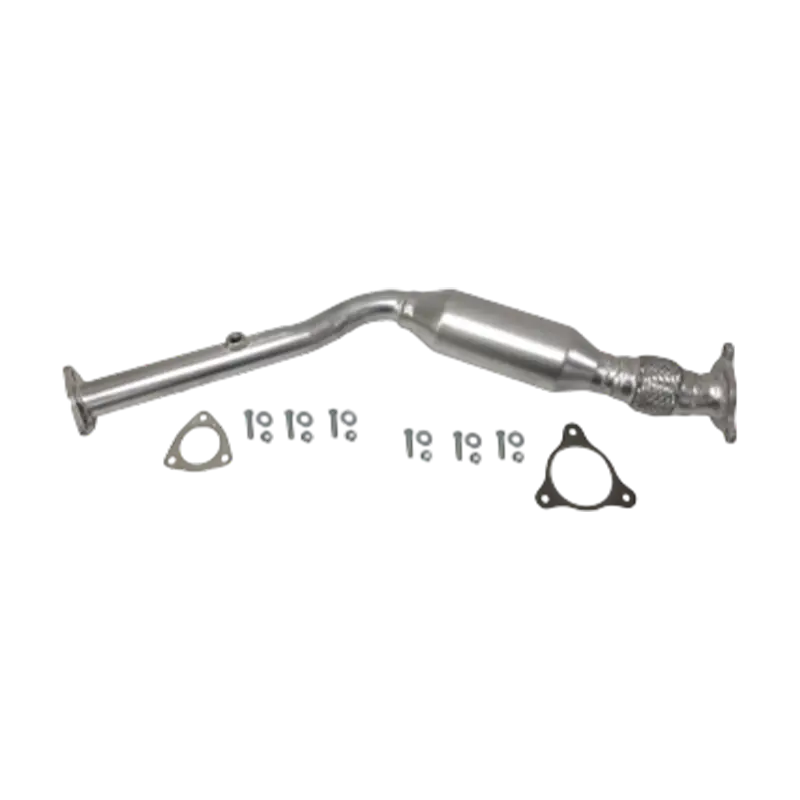
This product is designed for vehicles equipped with a 2.2L engine and an exhaust system OE number of 53508, applicable to 2003-2004 model years. It is...
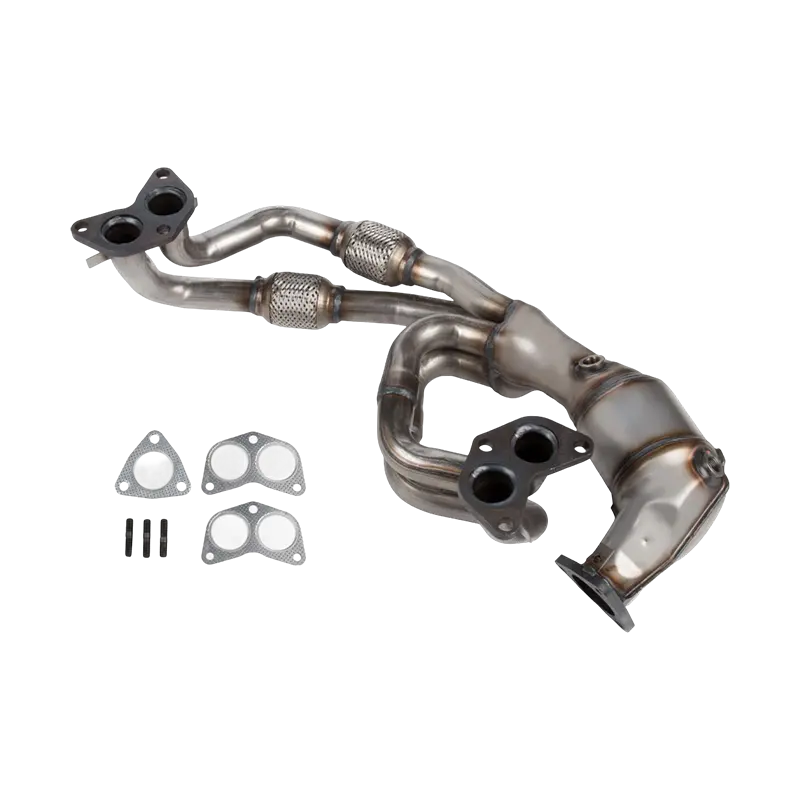
This product is designed for vehicles with an exhaust system OE number of 674-864, applicable to 2006-2010 model years. It is a three-way catalytic co...
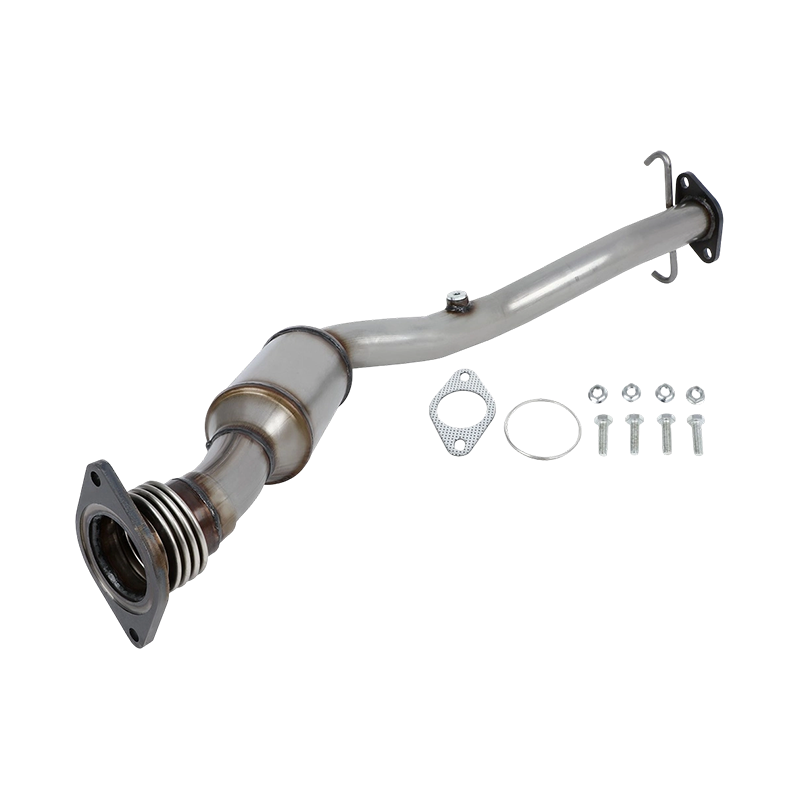
This product is designed for vehicles equipped with a 3.8L engine and an exhaust system OE number of 54752, applicable to 2004-2008 model years. It is...
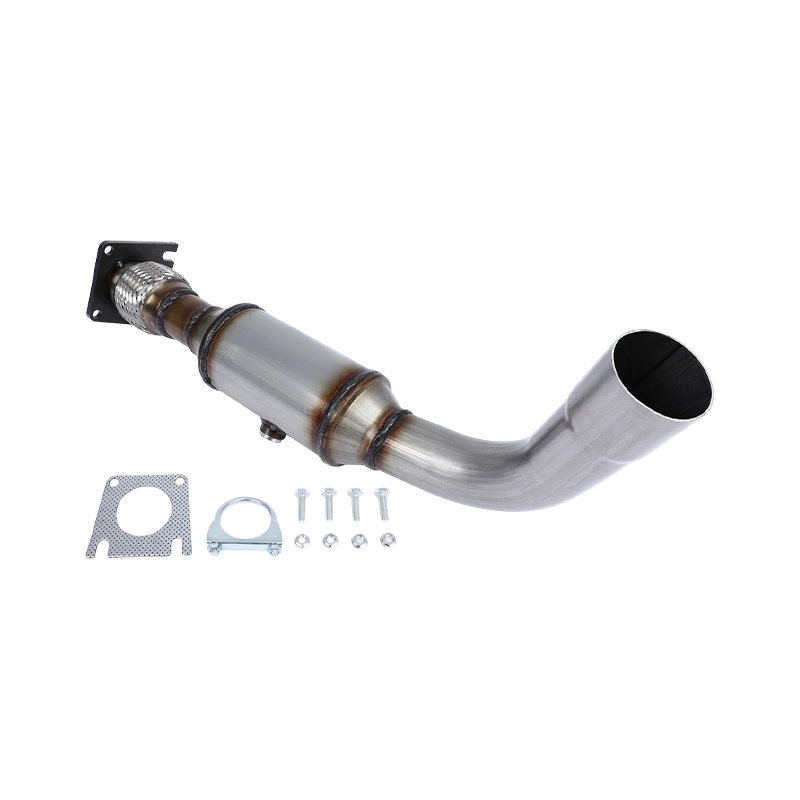
This product is designed for vehicles equipped with a 3.8L engine and an exhaust system OE number of 42912, applicable to 2008-2010 model years. It is...
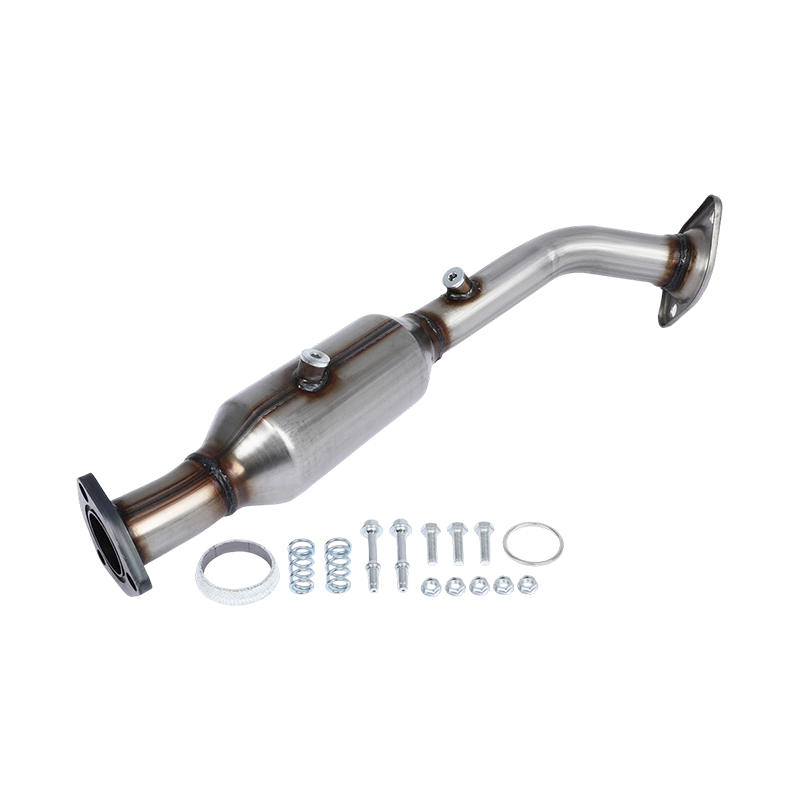
This product is designed for vehicles equipped with a 2.0L base configuration engine and an exhaust system OE number of 53583, applicable to 2002-2006...
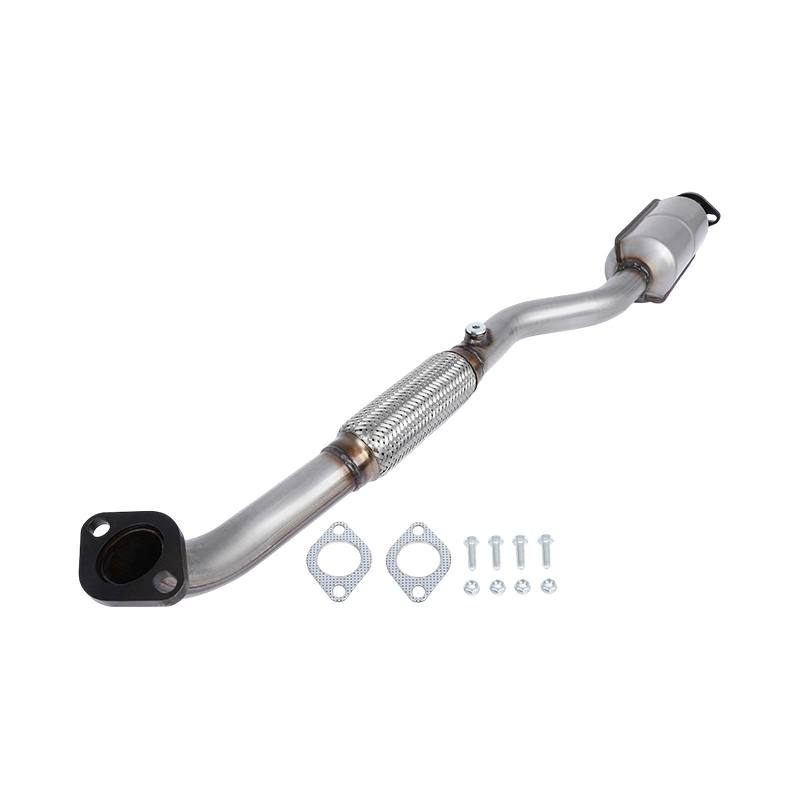
This product is designed for vehicles equipped with a 2.0L engine and an exhaust system OE number of 54774, applicable to 2004-2006 model years. It is...
A catalytic converter shell is the first thing you see under a vehicle, but its stainless-steel bod......
READ MOREEvery gasoline engine that meets modern emission standards depends on a component most drivers neve......
READ MOREExhaust System Components The shell rarely fails first — but when it does, everything inside it goe......
READ MOREUnderstanding Emission Control Catalysts Emission control catalysts play a critical role in the aut......
READ MOREWhy Welded Catalytic Converter Components Matter in Modern Exhaust Systems Welded catalytic convert......
READ MOREThree-Way Catalytic Converters: Essential Emission Control Devices Three-way catalytic converters a......
READ MORE