


 English
 русский
 Español
2.4L Three-Way Catalytic Converter with Front Flex Pipe Assembly
This product is designed for vehicles equipped with a 2.4L engine and an exhaust system OE number of 16299, applicable to 2003-2007 model years. It is...
The shell rarely fails first — but when it does, everything inside it goes with it.
A catalytic converter's substrate does the actual emissions work, but the shell is what keeps that substrate intact, insulated, and sealed against the exhaust stream for years of heat cycling and vibration. Shops and DIY installers often focus entirely on emissions grade and forget that shell construction has just as much influence on how long a converter lasts and how well it fits a given exhaust layout. The sections below compare the two dominant shell designs, the materials used to build them, and how to match shell specifications to a specific application.
Nearly every catalytic converter shell on the market is built as either a clam shell or a spun-body housing.
Approximate peak exhaust temperature a converter shell must withstand repeatedly without cracking or warping.
Common stainless steel grades used for shell construction, each with a different corrosion and heat tolerance.
Clam shell construction is the older, more traditional method — two stamped steel halves are pressed around the substrate and welded together along a seam that runs the length of the housing. Spun-body construction takes a single piece of tubing and spins it under pressure into its final tapered shape around the substrate, eliminating the center seam entirely.
Neither design is inherently "wrong" for every application — clam shell housings remain common in universal-fit and heavy-duty replacement converters where cost matters, while spun-body designs have become the default in space-constrained direct-fit applications on modern vehicles.
The shell itself is only the outermost layer. Between the metal housing and the substrate sits a ceramic fiber mat that does two jobs at once: it cushions the substrate against vibration, and it expands slightly under heat to hold the substrate firmly in place inside the shell without crushing it.
| Layer | Function |
| Outer shell | Structural housing; contains exhaust flow and protects internal components from road debris and impact |
| Intumescent mat | Cushions and seals the substrate against the shell wall; expands under heat to maintain a tight fit |
| Substrate (ceramic or metallic) | Honeycomb structure coated with catalyst material where the actual emissions conversion happens |
| End cones | Transition sections that direct exhaust flow smoothly into and out of the substrate face |
Shell material affects corrosion resistance far more than most buyers realize, and the difference shows up most clearly in regions that use road salt or see high humidity year-round.
| Alloy Grade | Corrosion Resistance | Typical Use |
| 409 stainless steel | Moderate | Budget-oriented replacement shells, drier climates |
| 439 stainless steel | Good | Mid-range OEM-style replacements |
| 304 stainless steel | Excellent | Premium and marine-adjacent applications, high-salt regions |
A shell built from 409-grade steel isn't defective — it's simply positioned for a lower price point and a shorter expected service window than a 304-grade housing, which can often outlast the rest of the exhaust system it's welded into.
Shell shape and size aren't arbitrary — they're engineered around how the converter needs to bolt or weld into a specific exhaust system. A direct-fit converter mirrors the factory shell's flange positions, inlet and outlet angles, and overall length, giving a hassle-free swap. A universal-fit converter uses a simplified shell shape that requires cutting, welding, or fabrication to integrate into the existing exhaust.
Shell construction and material grade are typically tied to the converter's overall emissions certification level, since manufacturers build higher-certification units to a tighter overall spec.
| Certification Level | Typical Shell Spec | Vehicle Application |
| Standard Load Pre-OBDII | 409-grade clam shell or spun-body | Older vehicles predating OBDII emissions monitoring |
| Heavy Metal OBDII | 439-grade, reinforced substrate mounting | Early OBDII vehicles under federal EPA emissions standards |
| OEM Grade OBDII | 304-grade shell, higher substrate density | Vehicles under CARB or the latest state-level emissions rules |
Content
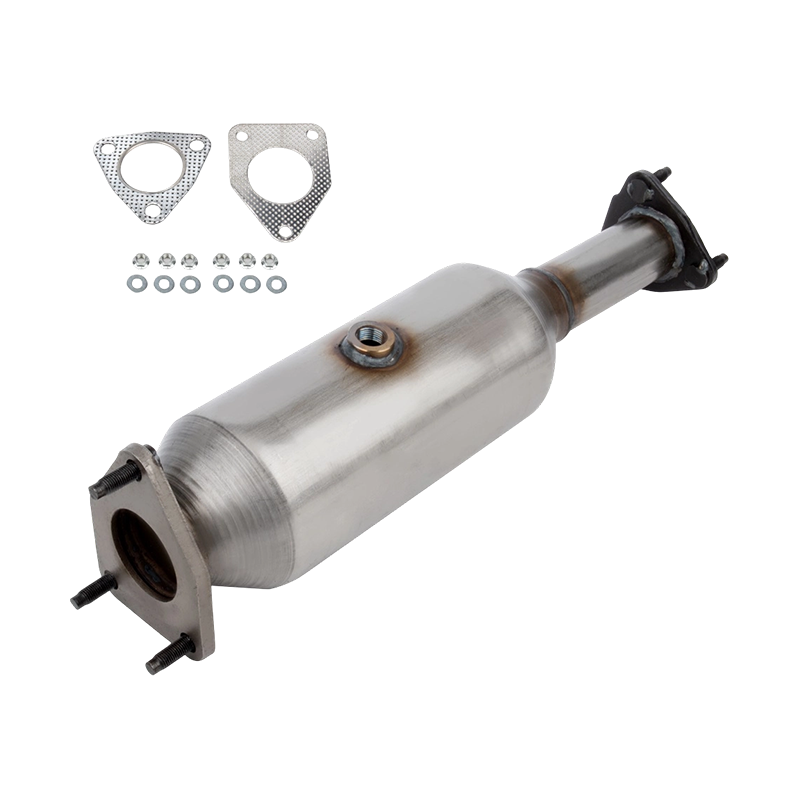
This product is designed for vehicles equipped with a 2.4L engine and an exhaust system OE number of 16299, applicable to 2003-2007 model years. It is...
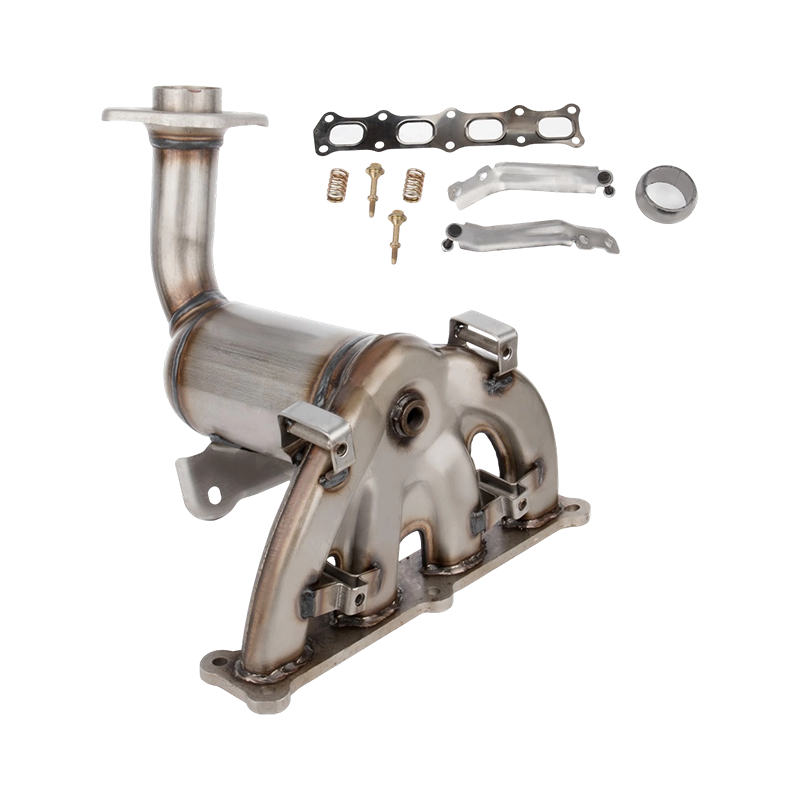
This product is designed for vehicles equipped with a 2.4L AWD engine and an exhaust system OE number of 674-871, applicable to 2007-2010 model years....
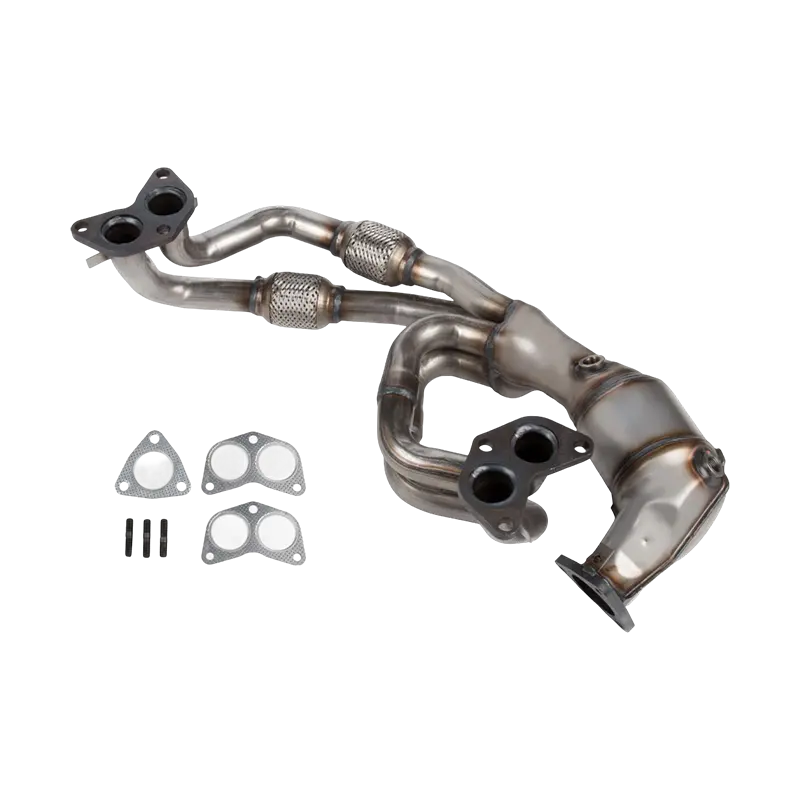
This product is designed for vehicles with an exhaust system OE number of 674-864, applicable to 2006-2010 model years. It is a three-way catalytic co...
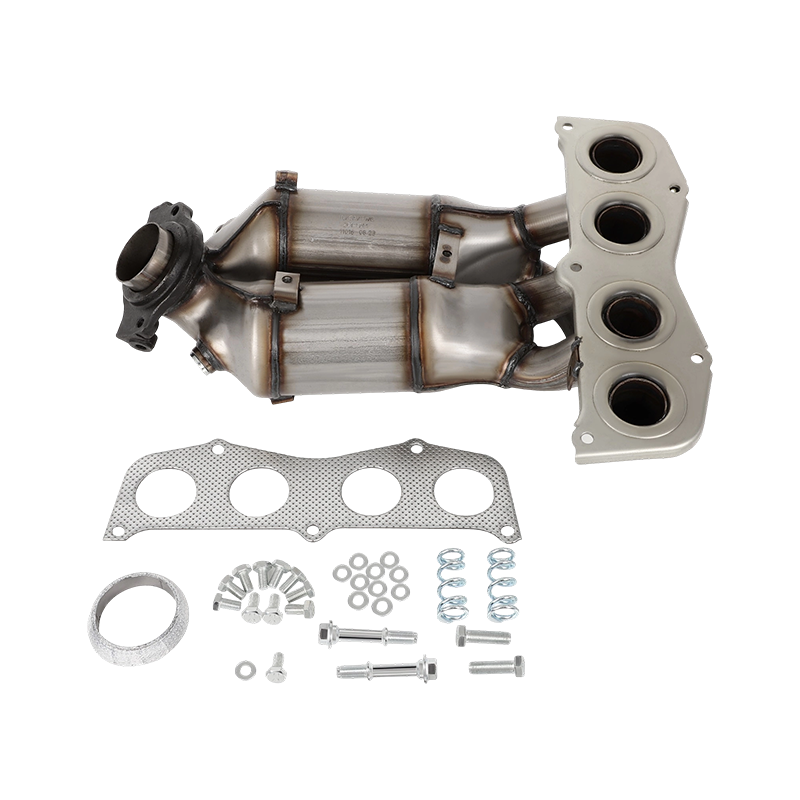
This product is designed for vehicles with an exhaust system OE number of 40583, applicable to 2001-2003 model years. It is an integrated assembly com...
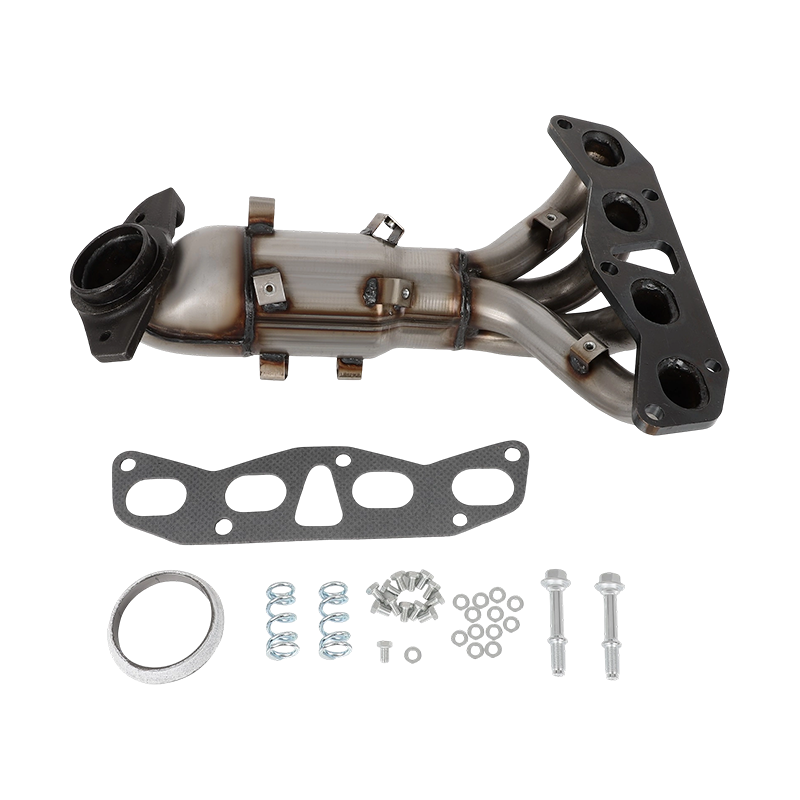
This product is designed for vehicles equipped with a 2.5L engine and an exhaust system OE number of 674-659, applicable to 2002-2006 model years. It ...
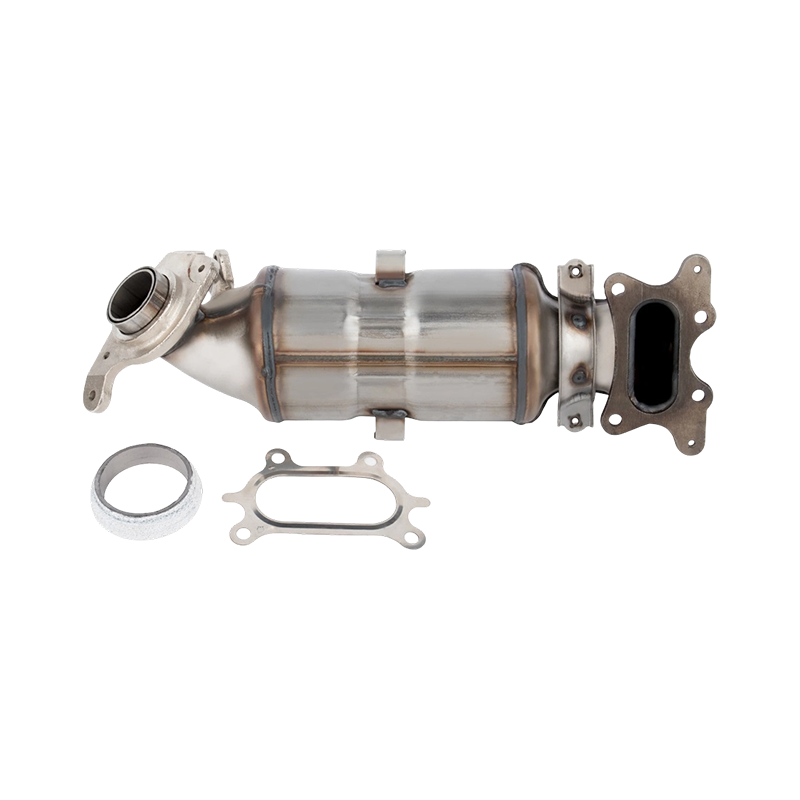
This product is designed for vehicles equipped with a 1.8L four-cylinder SOHC engine and an exhaust system OE number of 674-986, applicable to 2006-20...
When an exhaust system integrator or procurement engineer evaluates a catalytic converter, the firs......
READ MOREA catalytic converter shell is the first thing you see under a vehicle, but its stainless-steel bod......
READ MOREApplication Areas High-performance special ceramics are widely used in the following fields: Machine......
READ MOREWhy Welded Catalytic Converter Components Matter in Modern Exhaust Systems Welded catalytic convert......
READ MOREAchieving structural integrity and optimal exhaust flow in emission control hardware depends entir......
READ MOREThree-Way Catalytic Converters: Essential Emission Control Devices Three-way catalytic converters a......
READ MORE