

 English
 русский
 Español
Achieving structural integrity and optimal exhaust flow in emission control hardware depends entirely on precision-engineered welded catalytic converter components. When evaluating fabrication strategies, high-efficiency laser welding consistently outperforms traditional arc methods by delivering a 40% narrower heat-affected zone, reducing thermal distortion on thin-gauge stainless steel housings, and maintaining airtight seals under cyclic thermal stress up to 900°C.
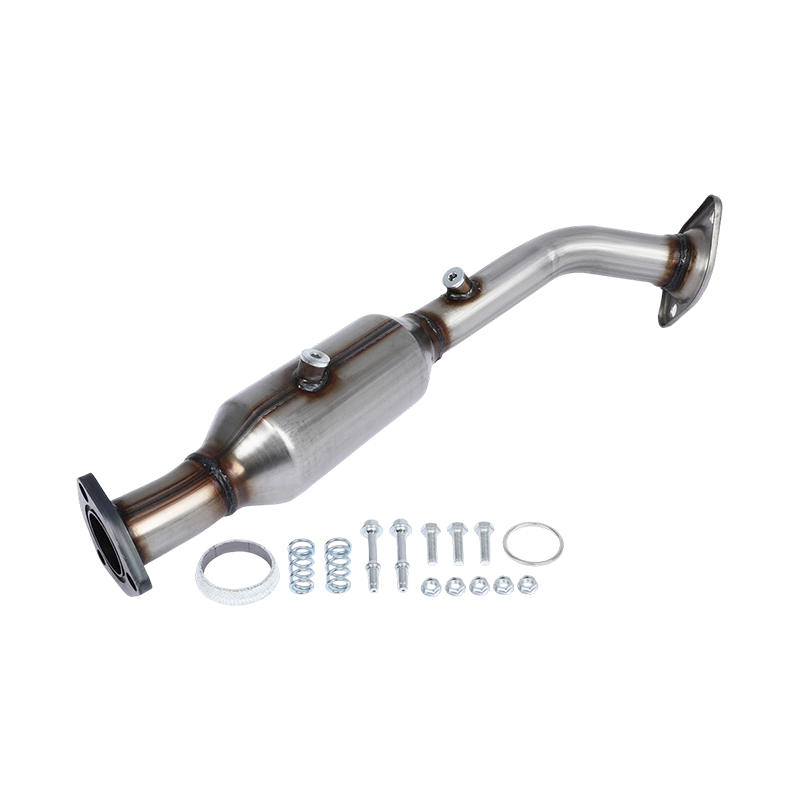
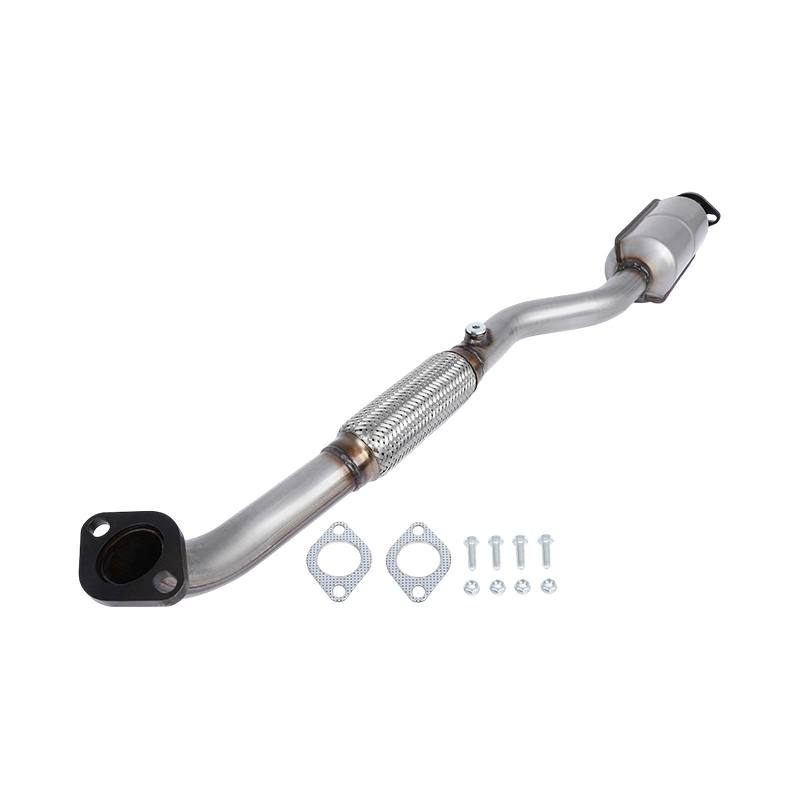
Structural Anatomy and Core Material Specifications
The architecture of a modern emission control system relies on the seamless integration of several distinct elements. Each part demands exacting metallurgy, typically utilizing ferritic stainless steel grades such as 409 or 441 due to their superior oxidation resistance and thermal expansion match with internal ceramic or metallic substrates.
- Outer Shell and Cans: Formed from high-tolerance sheet metal, housing the internal matting and substrate under strict radial compression.
- End Cones: Transition elements that bridge the gap between standard exhaust piping and the main converter body, requiring smooth internal profiles to prevent flow turbulence.
- Bosses and Bung Ports: Threaded or sleeved ports explicitly welded into position for oxygen sensors and temperature probes, acting as critical stress concentration points.
- Internal Matting Retention Rings: Specialized internal constraints that stop substrate migration during high-velocity exhaust pulses.
Comparative Analysis of Manufacturing Methodologies
Production engineering teams must weigh throughput speeds against joint metallurgical quality. Selecting the appropriate joining technique dictates the long-term durability and failure rates of welded catalytic converter components in field operations.
| Parameter | Laser Beam Welding | TIG / Gas Tungsten Arc Welding | MIG / Gas Metal Arc Welding |
|---|---|---|---|
| Processing Speed | High (up to 5 meters per minute) | Low to Moderate (0.5 - 1.5 m/min) | High (variable wire feed speeds) |
| Heat-Affected Zone (HAZ) | Extremely narrow, localized | Wide, prone to grain growth | Broad, higher risk of base metal warping |
| Filler Material Requirement | Generally autogenous (none required) | Required for joint reinforcement | Continuous consumable wire electrode |
| Automation Potential | Exceptional integration with 6-axis robotics | Moderate, complex seam tracking needed | High, standard industrial setup |
Thermal Dynamics and Stress Management
During vehicle operation, emission control systems experience severe thermal shock cycles, transitioning from ambient temperatures to over 800°C within minutes. Welded joints must absorb differential expansion rates between the outer shell and internal elements without cracking.
For instance, data from endurance dyno testing indicates that laser-welded seams maintain 95% of their tensile strength after 500 thermal shock cycles, whereas conventional arc-welded variants frequently show micro-fissuring near the boundary layer due to excessive retained thermal stresses. Controlling the cooling rate and utilizing automated post-weld heat treatment protocols significantly mitigates these vulnerabilities.
Quality Control Protocols for High-Value Production
Ensuring zero-defect manufacturing requires rigorous inline and offline inspection routines. Because exhaust leaks can compromise downstream oxygen sensor readings and trigger engine management fault codes, quality verification is non-negotiable.
- Helium Leak Testing: Performed on 100% of high-performance assemblies to detect microscopic pinholes invisible to the naked eye.
- Automated Optical Inspection (AOI): High-resolution camera arrays scan bead width, undercut defects, and surface uniformity at production line speeds.
- X-ray Radiography: Spot-checking deep penetration zones on thick-walled end cone transitions to ensure internal fusion is absolute.
Optimizing Joint Design for Extended Service Life
Geometric configuration dictates how mechanical loads are distributed across the assembly. Lap joints and flanged slip-fits are frequently utilized over butt joints to provide a mechanical interlocking effect prior to the application of the weld bead. This design consideration ensures that even if localized micro-defects occur, the structural matrix prevents catastrophic separation or exhaust bypass, safeguarding compliance with strict international emissions regulations.
Frequently Asked Questions
What are the primary stainless steel grades used for welded catalytic converter components?
Grades 409 and 441 ferritic stainless steels are predominantly specified due to their optimal balance of high-temperature corrosion resistance, formability, and cost-effectiveness under thermal cycling.
Why is laser welding preferred over traditional arc welding for thin-gauge converter shells?
Laser welding delivers a concentrated, high-density energy beam that minimizes the heat-affected zone, preventing the warping, burn-through, and structural thinning common in thin-walled automotive sheet metal assemblies.
How do manufacturing defects in converter welds affect vehicle emissions compliance?
Even microscopic weld cracks or pinholes permit unmetered air to enter or exhaust to escape prematurely, skewing upstream and downstream oxygen sensor telemetry and causing the engine control unit to improperly balance the air-fuel ratio.
What inspection methods verify the airtight integrity of these welded joints?
Manufacturers primarily utilize automated helium mass spectrometer leak testing alongside high-resolution optical surface scanning and periodic destructive metallographic cross-sectioning.
Does filler wire need to be used during the automated laser welding of catalytic converters?
In most modern high-volume applications, laser welding is executed autogenously—meaning the edges of the joint are melted and fused together directly without adding extra filler metal—provided joint fit-up tolerances are tightly controlled.