


 English
 русский
 Español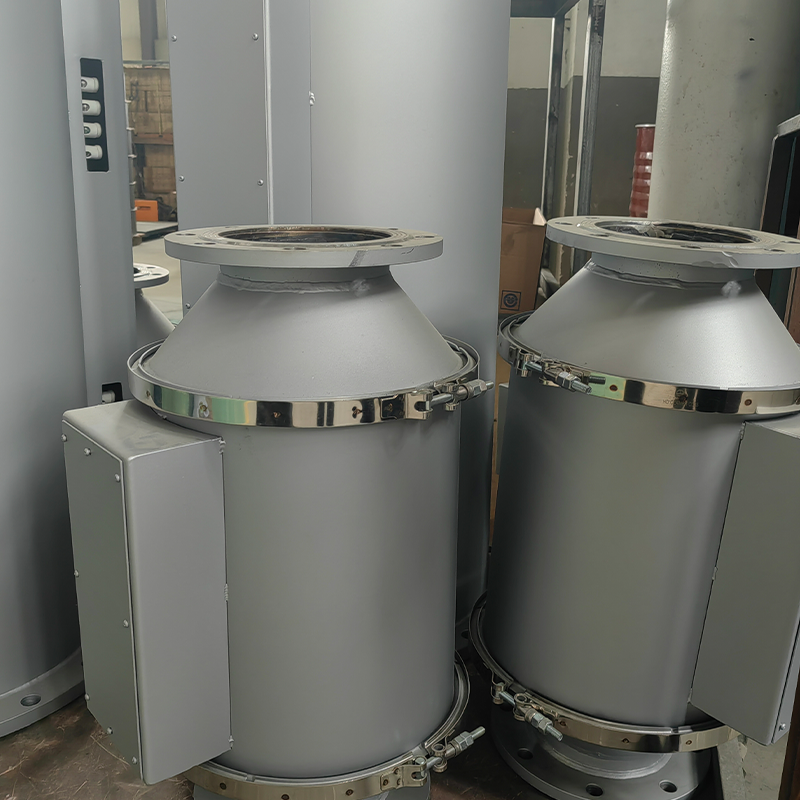
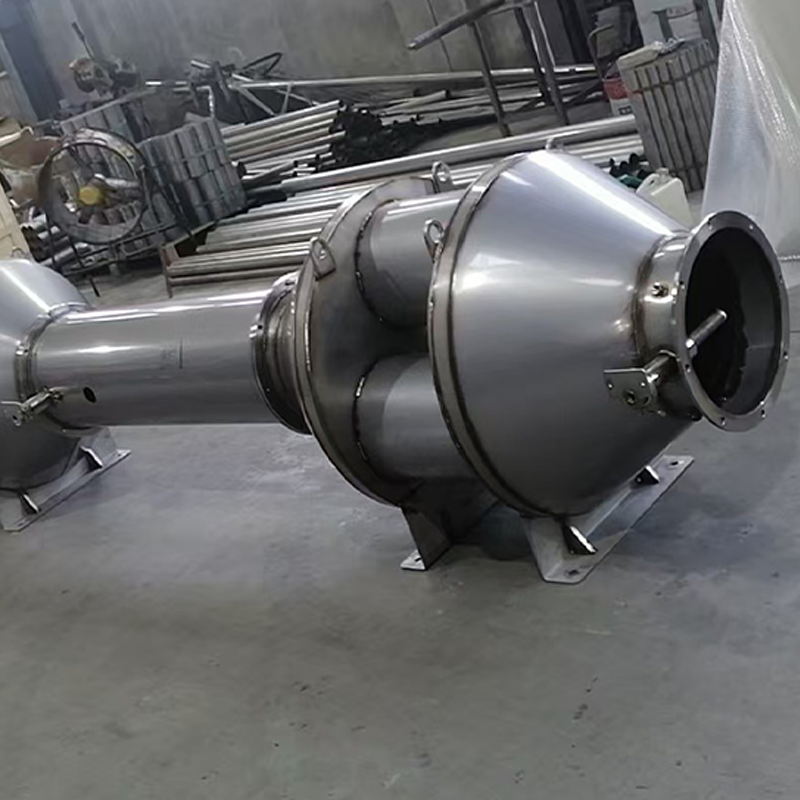
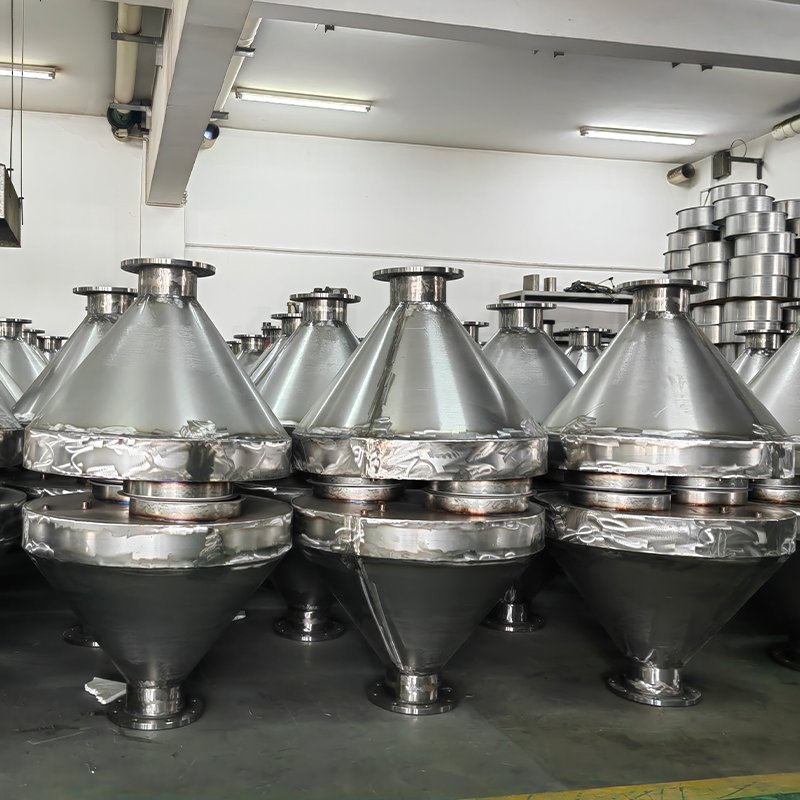
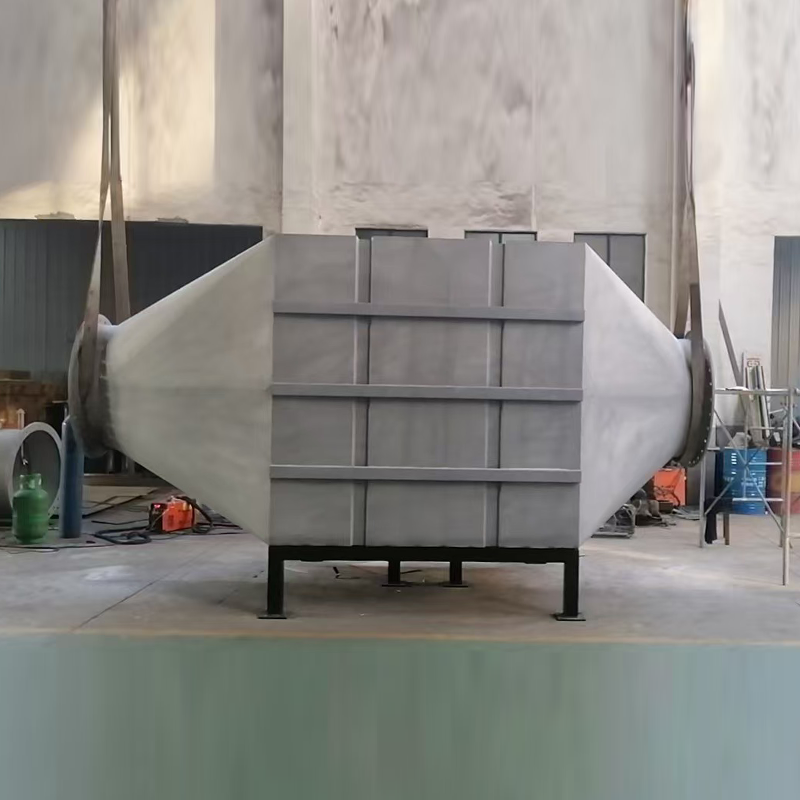
A DOC (Diesel Oxidation Catalyst) is a critical emissions control component that reduces harmful pollutants like carbon monoxide (CO), hydrocarbons (HC), and soluble organic fractions in diesel exhaust. It works by oxidizing these pollutants into less harmful substances such as carbon dioxide (CO₂) and water vapor. In ...
Generator Catalytic Converter Manufacturers
The three-way catalytic converter for generator sets is a critical component for reducing harmful exhaust emissions from the unit, capable of simultaneously purifying carbon monoxide (CO), hydrocarbons (HC), and nitrogen oxides (NOx) present in the exhaust gases.
Focus on three-way catalytic carrier coating
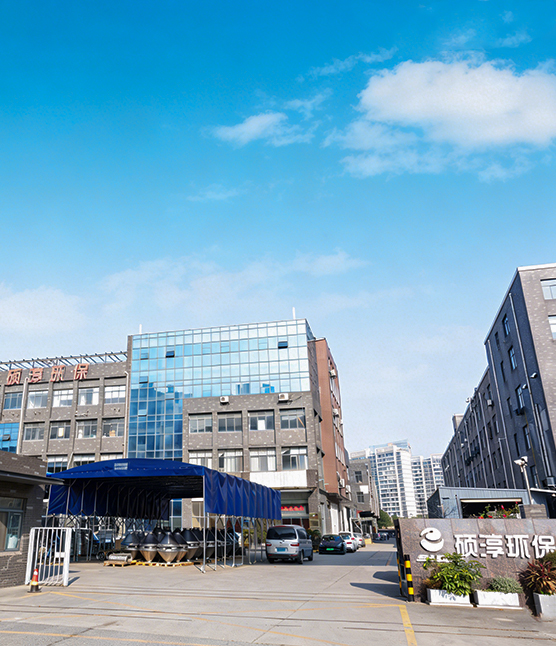
As China Generator Converters Manufacturers and Industrial Generator Set Suppliers, Founded in July 2024, Longyou Shuochun New Material Technology Co., Ltd. is a high-tech enterprise specializing in the coating and sales of three-way catalytic converters. It is deeply engaged in the field of new materials.
The company always keeps an eye on the industry frontier, actively learns from and draws on the advanced formulas and mature technologies of domestic and foreign counterparts. Through in-depth research and localization of mainstream formulas, it accurately adjusts the proportion of raw materials such as rare earths, precious metals and non-precious metals, so as to ensure that the coated carriers produced have stable catalytic activity and reliable performance.
The company's products cover a variety of specifications and models, and its products and technologies are applicable to automobiles, motorcycles, general-purpose engines, construction machinery, marine power, generator sets, agricultural machinery and other fields.
In the future, the company will continue to learn advanced industry experience, optimize production and services, and contribute to the realization of carbon peaking and carbon neutrality goals in China and around the world.
News Center
-
-
Understanding Emission Control Catalysts Emission control catalysts play a critical role in the automotive and industrial sectors by reducing harmful pollutants released into the atmosphere. These catalysts are designed to promote chemical reactions that transform toxic gases, such as carbon monoxide (CO), nitrogen ox...
-
The most direct signals that a Diesel Oxidation Catalyst (DOC) needs replacement include: a persistent check engine light — particularly DTC codes such as P0420/P0421 — exhaust HC and CO emissions exceeding regulatory limits by 50% or more, an abnormal increase in fuel consumption of 5%–15%, white or blue smoke continu...
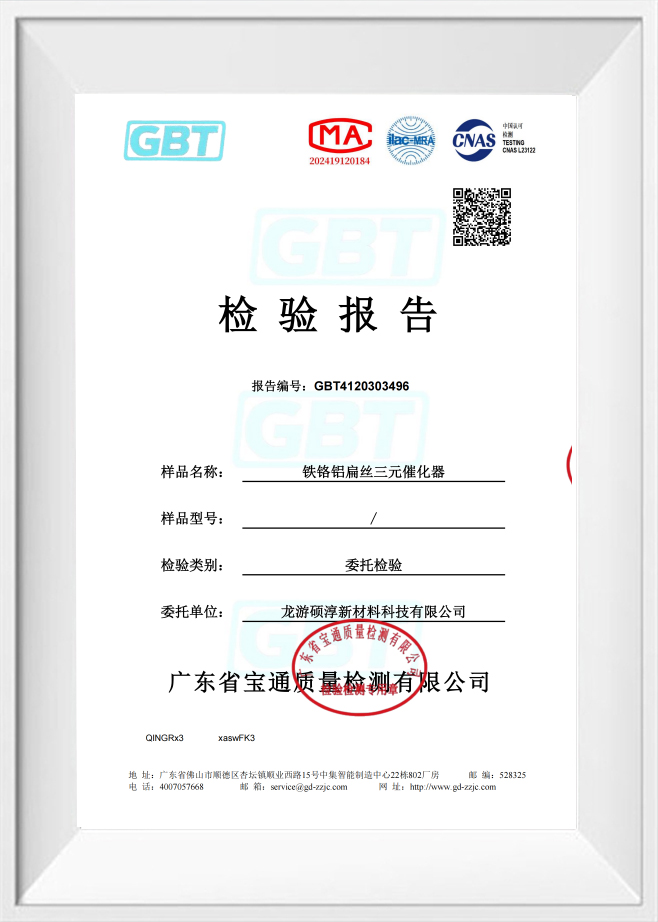
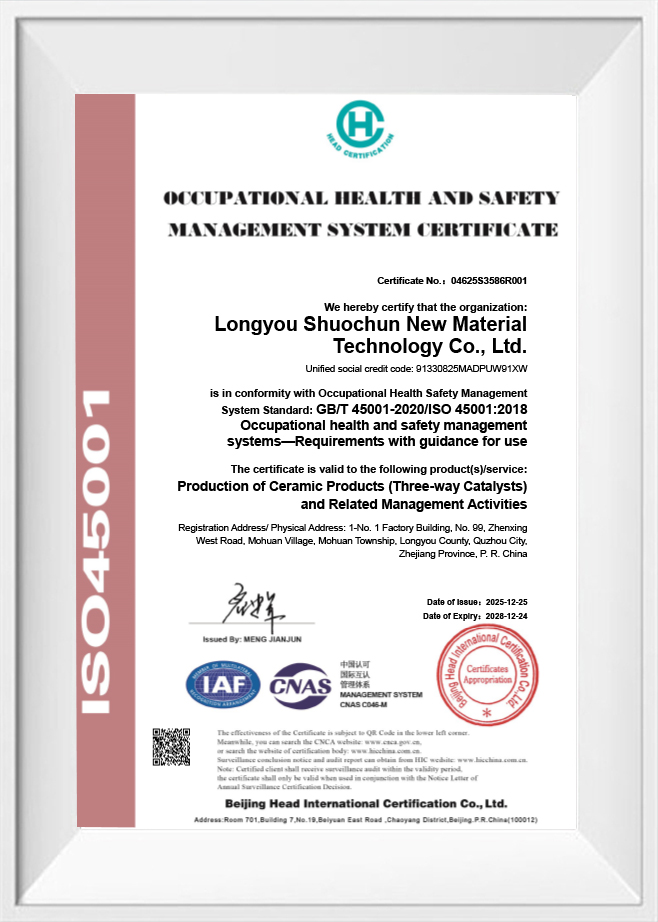
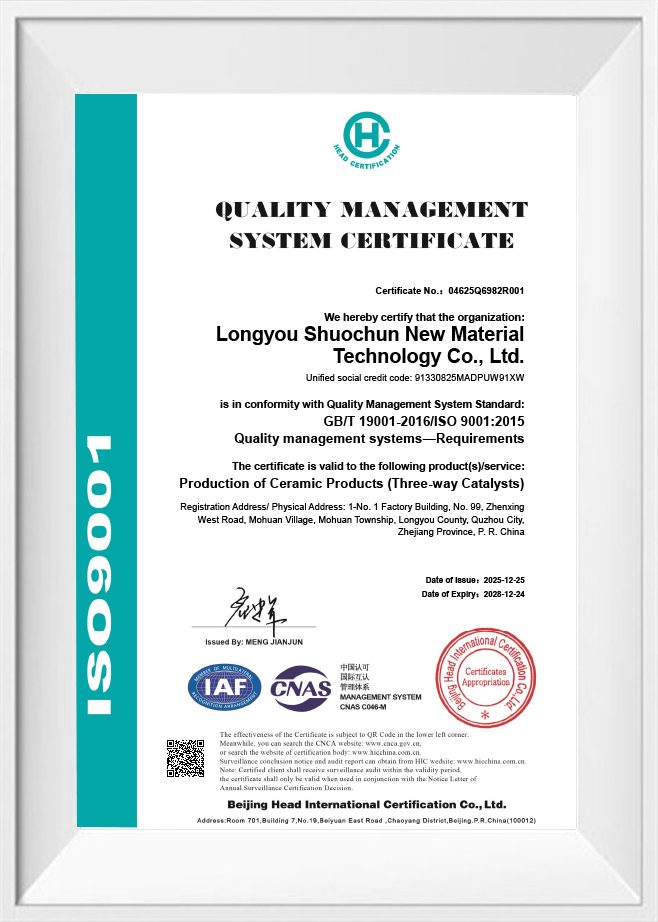
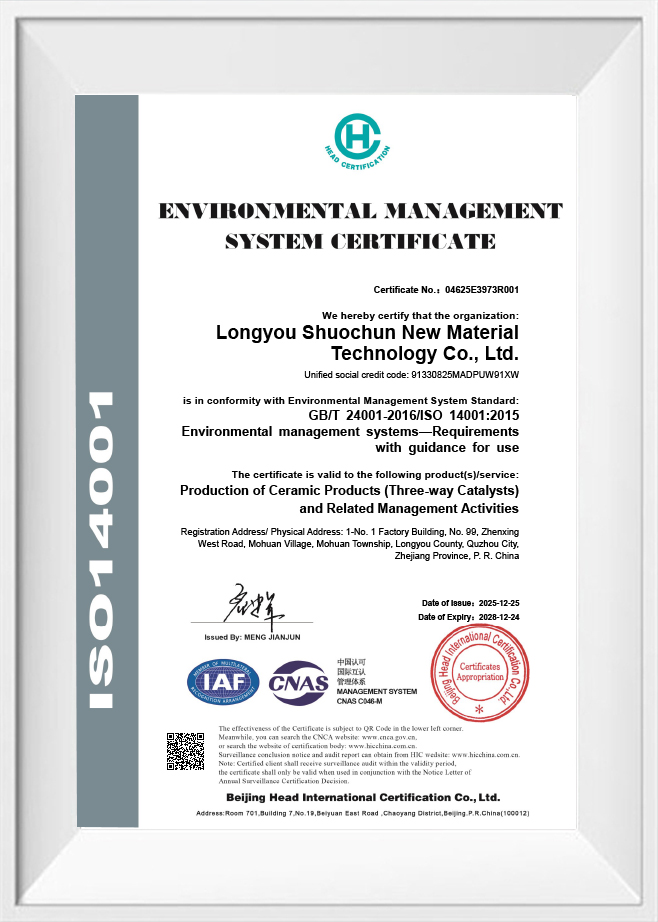
Certificate Of Honor
Message Feedback
Generator Set Industry knowledge
Noise and Vibration Control in Generator Sets: Technical Insights
Design Considerations for Noise Reduction
Longyou Shuochun New Material Technology Co., Ltd. applies advanced engineering principles to manage noise levels in generator sets. The design integrates acoustic insulation, optimized enclosure shapes, and strategic placement of components to minimize sound emission. Special attention is given to areas where mechanical vibrations could generate additional noise, ensuring that energy from the engine and alternator is managed effectively before it reaches the surrounding environment.
Vibration Isolation Techniques
The generator set incorporates vibration isolation systems to reduce the transmission of mechanical oscillations to the surrounding structure. Rubber mounts, resilient pads, and flexible couplings are used to absorb energy from moving parts. These measures prevent structural resonance and maintain stability during operation, which is critical for both human comfort and the longevity of connected equipment.
Engine and Component Balancing
Noise and vibration are closely linked to the dynamic balance of engine components. The generator set design emphasizes precise balancing of rotating parts, including the crankshaft, rotor, and cooling fans. Imbalances are corrected during the manufacturing process through calibration and fine-tuning. This attention to balance reduces both vibrational amplitude and the associated acoustic emissions, contributing to a smoother and quieter operation.
Acoustic Enclosures and Barriers
The use of acoustic enclosures around the generator set helps contain noise and prevent its propagation. Panels are constructed from materials that combine mass with damping properties to absorb sound energy. Louvers and internal baffling direct airflow without compromising noise control. By integrating these enclosures into the overall generator design, Longyou Shuochun New Material Technology Co., Ltd. provides a system that maintains operational efficiency while limiting environmental noise impact.
Performance under Different Load Conditions
Noise and vibration levels vary depending on operational load. Table 1 provides typical measurements for a generator set under different load conditions. The data illustrates how vibrations and sound levels change with increasing engine output, providing a reference for expected behavior in real-world applications.
| Load Condition | Vibration Level (mm/s) | Noise Level (dB) |
| Idle | 2.5 | 68 |
| Partial Load | 3.1 | 72 |
| Full Load | 3.8 | 76 |
Maintenance and Long-Term Stability
Long-term noise and vibration control depend on routine maintenance. Regular inspection of mounts, couplings, and engine components ensures that the isolation system remains effective. Any loosening of fasteners or wear in damping elements can increase vibration levels. Periodic balancing and alignment checks help maintain operational stability, preserving both performance and comfort over time.
Integration with Environmental and Safety Standards
The generator set is designed to comply with relevant industrial and environmental regulations for noise and vibration. Material selection, enclosure design, and component isolation are optimized to meet thresholds for occupational safety and community impact. This approach ensures that the generator operates reliably while maintaining acceptable noise and vibration levels for surrounding personnel and structures.
Predictive Analysis and Optimization
Longyou Shuochun New Material Technology Co., Ltd. uses predictive modeling to assess potential vibration hotspots and acoustic emission points before production. Computational simulations analyze airflow, rotational dynamics, and structural responses to identify areas of improvement. This predictive approach allows engineers to optimize the generator set design, ensuring stable vibration and noise levels under various operational scenarios.
FAQ
Q: How does the generator set maintain low noise levels during continuous operation?
A: Longyou Shuochun New Material Technology Co., Ltd. employs acoustic enclosures, optimized component placement, and vibration-damping mounts in the generator set design. These features reduce sound transmission and help maintain controlled noise levels even during extended running periods.
Q: What measures are taken to reduce vibration in the generator set under varying loads?
A: The generator set incorporates resilient pads, flexible couplings, and carefully balanced rotating components. These measures absorb mechanical energy and prevent resonance, ensuring stable vibration performance across different operational loads.
Q: How does component balancing affect the overall stability of the generator set?
A: Precise balancing of the rotor, crankshaft, and cooling fans minimizes rotational imbalances that could generate additional noise or vibrations. Longyou Shuochun New Material Technology Co., Ltd. ensures that all moving parts are calibrated to maintain mechanical stability during long-term use.
Q: How are environmental factors considered in the noise and vibration control of the generator set?
A: Materials resistant to temperature fluctuations and corrosion, combined with protective coatings and acoustic insulation, help the generator set maintain performance in varied environmental conditions. This design approach limits the impact of external factors on vibration and noise levels.
Q: What role does predictive modeling play in optimizing generator set performance?
A: Predictive simulations analyze airflow, rotational dynamics, and structural responses to identify potential sources of vibration and acoustic emissions. These insights guide adjustments in design and material selection, helping ensure consistent noise and vibration control.
Q: How does maintenance impact the long-term noise and vibration performance of the generator set?
A: Routine inspection of mounts, couplings, and moving parts ensures that the isolation and damping systems remain effective. Periodic alignment and balancing help preserve low noise levels and stable vibrations, supporting reliable operation over the generator set's service life.
Q: Can the generator set meet industrial and environmental regulations for noise and vibration?
A: The design and material selection are optimized to comply with relevant safety and environmental standards. This ensures that the generator set operates within acceptable limits for occupational exposure and community impact, maintaining controlled noise and vibration levels.
