


 English
 русский
 Español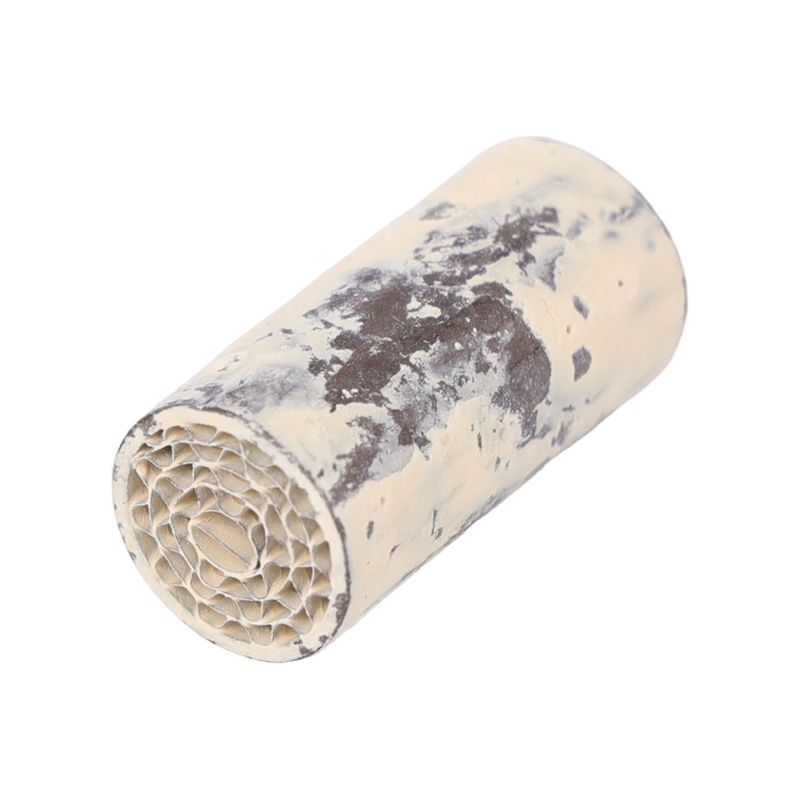
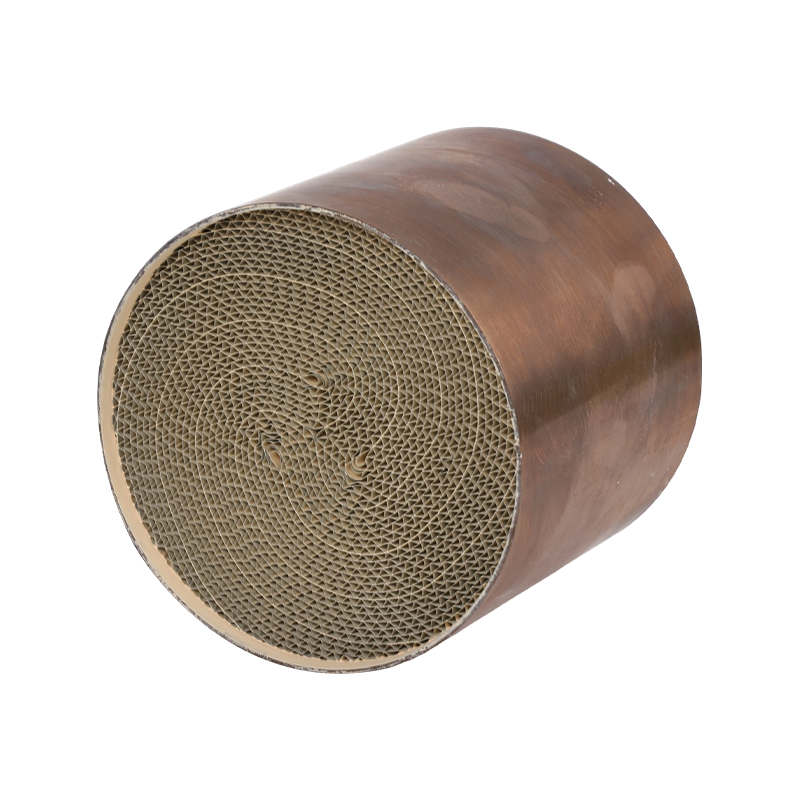
A DOC (Diesel Oxidation Catalyst) is a critical emissions control component that reduces harmful pollutants like carbon monoxide (CO), hydrocarbons (HC), and soluble organic fractions in diesel exhaust. It works by oxidizing these pollutants into less harmful substances such as carbon dioxide (CO₂) and water vapor. In ...
Emission Control Catalysts Manufacturers
A three-way catalytic converter is the core external purification device in an automotive exhaust system. It is primarily composed of a honeycomb carrier made of materials such as metals and cordierite, along with a γ-alumina catalytic coating that contains noble metals including platinum, palladium, and rhodium, as well as rare-earth components. Its operating principle relies on high temperatures ranging from 400–800 °C, during which the catalyst enhances the reactivity of carbon monoxide (CO), hydrocarbons (HC), and nitrogen oxides (NOx) present in the exhaust gases, facilitating their oxidation and reduction into harmless carbon dioxide (CO₂), water (H₂O), and nitrogen (N₂).
Focus on three-way catalytic carrier coating
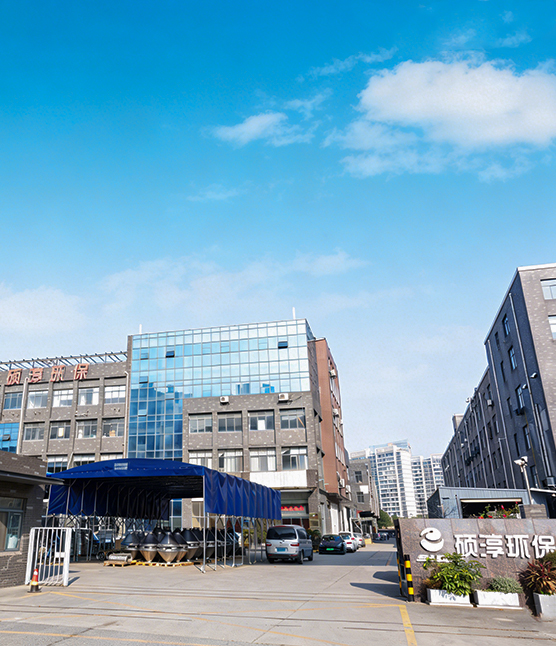
As China Emission Control Catalysts Factory and Catalytic Converter Coating Manufacturers, Founded in July 2024, Longyou Shuochun New Material Technology Co., Ltd. is a high-tech enterprise specializing in the coating and sales of three-way catalytic converters. It is deeply engaged in the field of new materials.
The company always keeps an eye on the industry frontier, actively learns from and draws on the advanced formulas and mature technologies of domestic and foreign counterparts. Through in-depth research and localization of mainstream formulas, it accurately adjusts the proportion of raw materials such as rare earths, precious metals and non-precious metals, so as to ensure that the coated carriers produced have stable catalytic activity and reliable performance.
The company's products cover a variety of specifications and models, and its products and technologies are applicable to automobiles, motorcycles, general-purpose engines, construction machinery, marine power, generator sets, agricultural machinery and other fields.
In the future, the company will continue to learn advanced industry experience, optimize production and services, and contribute to the realization of carbon peaking and carbon neutrality goals in China and around the world.
News Center
-
-
Understanding Emission Control Catalysts Emission control catalysts play a critical role in the automotive and industrial sectors by reducing harmful pollutants released into the atmosphere. These catalysts are designed to promote chemical reactions that transform toxic gases, such as carbon monoxide (CO), nitrogen ox...
-
The most direct signals that a Diesel Oxidation Catalyst (DOC) needs replacement include: a persistent check engine light — particularly DTC codes such as P0420/P0421 — exhaust HC and CO emissions exceeding regulatory limits by 50% or more, an abnormal increase in fuel consumption of 5%–15%, white or blue smoke continu...
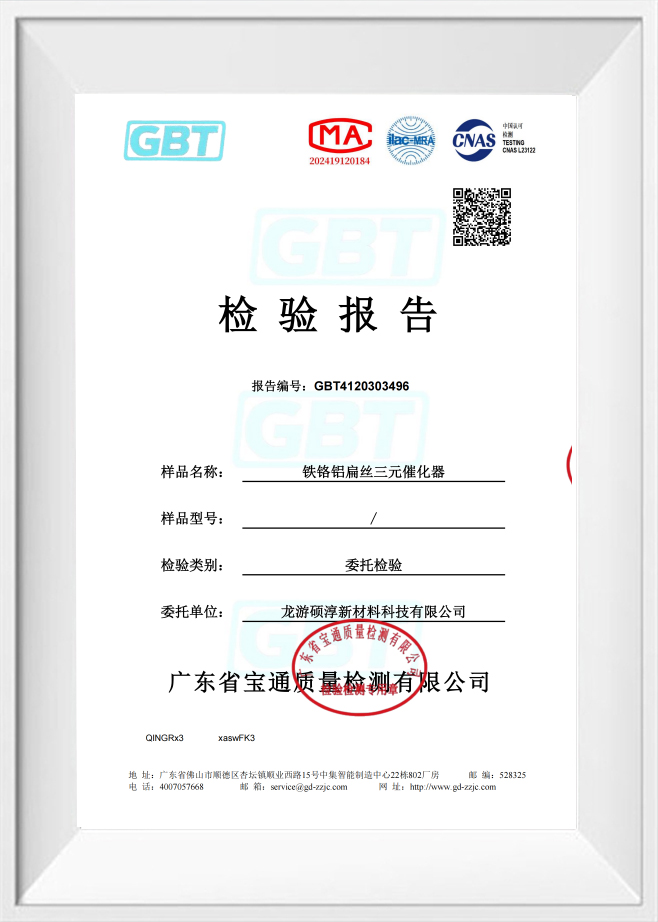
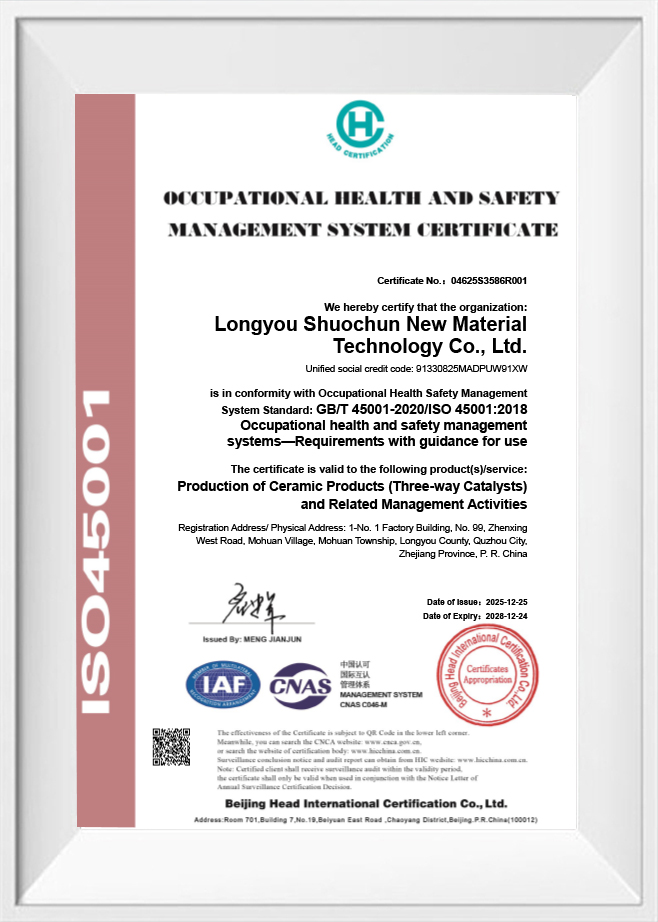
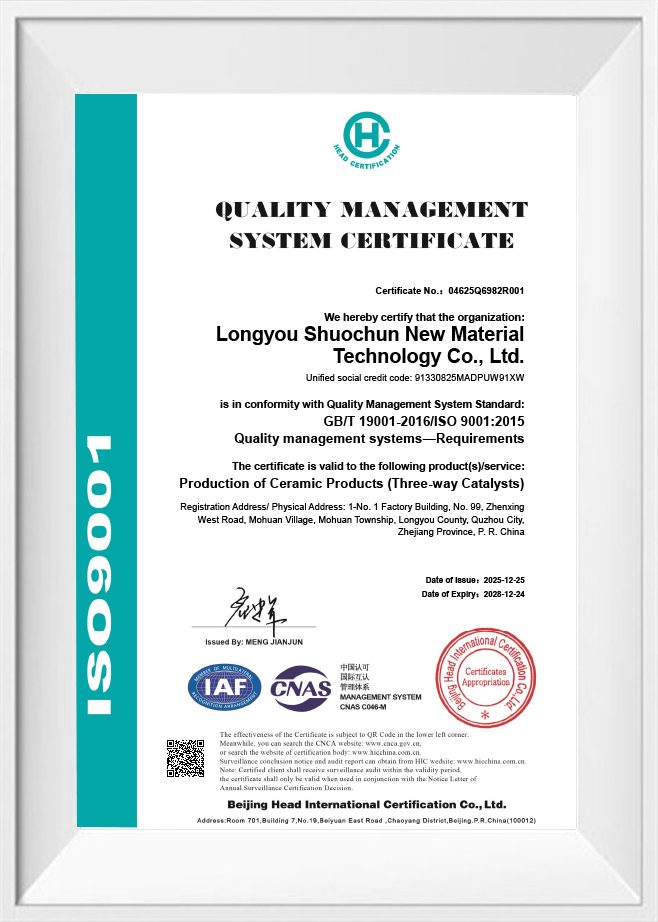
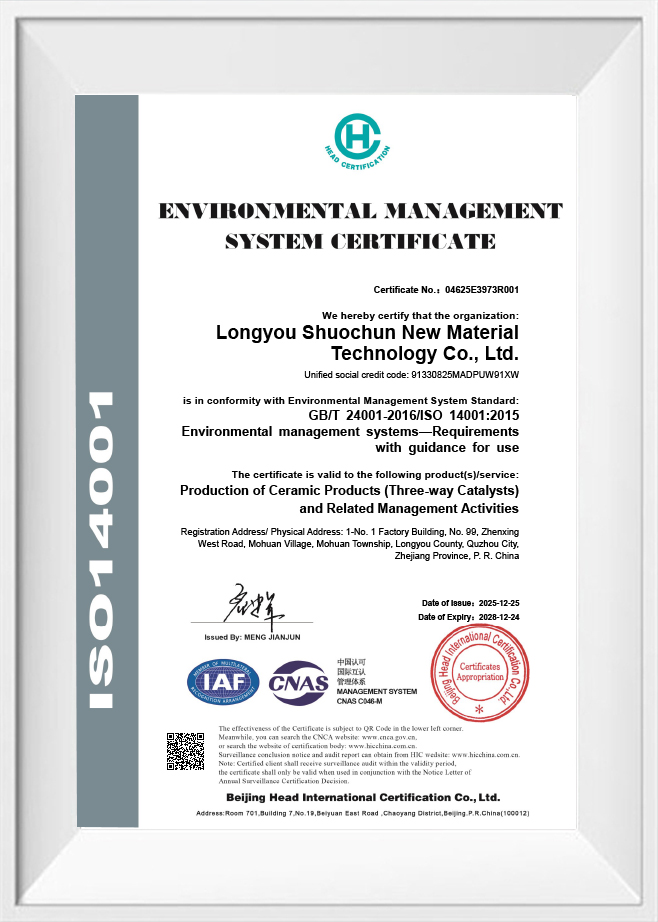
Certificate Of Honor
Message Feedback
Catalyst Series Industry knowledge
Catalyst Series Coating Technology: Industry Insights
Material Composition and Structural Features
Longyou Shuochun New Material Technology Co., Ltd. applies a coating technology in the Catalyst Series that utilizes advanced ceramic carriers combined with precise formulations of catalytic active components. This configuration ensures a uniform distribution of active elements and an optimized surface area for exhaust gas interaction. The design of the carrier allows steady chemical reactions, while controlled coating thickness maintains performance across different operating temperatures.
Thermal Stability and Durability
The coating demonstrates controlled responses to thermal cycling, common in internal combustion engine applications. The interaction between the carrier and active metals helps maintain structural integrity and chemical function over extended use. These characteristics support consistent emissions treatment even under fluctuating engine conditions, reducing the likelihood of performance degradation over time.
Chemical Resistance and Environmental Interaction
The coating exhibits resistance to chemical wear from exposure to exhaust gases such as nitrogen oxides, carbon monoxide, and hydrocarbons. Additives within the coating matrix limit the migration or dissolution of active metals, helping preserve catalytic activity. This resistance allows the Catalyst Series to operate effectively under varied environmental conditions, including exposure to common fuel and lubricant contaminants.
Gas Flow Dynamics and Efficiency
The microstructure of the coating promotes even gas flow through the substrate channels, ensuring uniform interaction with catalytic sites. By minimizing areas of stagnation, the design helps maintain consistent conversion rates and controlled pressure drop. These features contribute to stable performance and predictable thermal distribution across the converter.
Performance Under Different Engine Loads
The coating maintains functional consistency across different engine speeds and load conditions. Materials are selected to respond predictably to variations in temperature and gas composition. Table 1 illustrates approximate conversion rates of common pollutants under varying engine loads, based on laboratory-controlled simulations.
| Engine Load | Temperature (°C) | CO Conversion (%) | HC Conversion (%) | NOx Conversion (%) |
| Idle | 250 | 75 | 68 | 55 |
| Partial Load | 350 | 82 | 74 | 62 |
| Full Load | 450 | 88 | 79 | 70 |
Manufacturing Process and Quality Control
The Catalyst Series coating process incorporates precise deposition techniques and controlled thermal treatment. Each stage is monitored to maintain coating uniformity and surface morphology. Pre-treatment of the substrate, application of the catalytic slurry, drying, and controlled calcination are all part of the process. Quality control ensures minor deviations are detected and corrected to sustain long-term performance.
Adaptability to Different Vehicle Requirements
The coating technology allows for adaptation to various engine types and emission standards. By adjusting the composition and microstructure, the Catalyst Series can meet specific requirements for different vehicle models and fuel types. Laboratory testing and simulations support these adjustments, allowing the coating to function reliably across multiple applications.
Data-Driven Evaluation and Predictive Insights
Evaluation of the coating combines experimental testing and computational modeling. Simulations assess gas flow, heat distribution, and chemical conversion, providing predictive insights into long-term performance. Laboratory data are used to refine these models, supporting maintenance planning and informed application design.
FAQ
Q: How does the Catalyst Series coating maintain efficiency under varying engine temperatures?
A: The Catalyst Series uses a precisely engineered combination of ceramic carriers and catalytic components, which ensures thermal stability across different temperature ranges. This design allows the coating to maintain consistent chemical reactions, preserving pollutant conversion efficiency even under fluctuating engine operating conditions.
Q: What measures are taken to enhance the durability of the Catalyst Series coating?
A: Longyou Shuochun New Material Technology Co., Ltd. employs controlled deposition techniques and high-temperature calcination to create a stable bond between the catalytic materials and the substrate. These measures reduce the risk of structural degradation over prolonged usage and exposure to exhaust gases.
Q: How does the Catalyst Series respond to different exhaust gas compositions?
A: The coating incorporates additives that limit the migration or loss of active metals when exposed to varying chemical components such as NOx, CO, and hydrocarbons. This ensures steady catalytic performance across different fuel types and environmental conditions.
Q: In what way does the Catalyst Series optimize gas flow for improved conversion rates?
A: Microstructural features of the coating, combined with substrate channel design, allow uniform gas distribution. This minimizes areas of stagnation and ensures that exhaust gases consistently interact with the active catalytic sites, resulting in stable pollutant conversion rates.
Q: Can the Catalyst Series be adapted to different engine types or emission standards?
A: Yes, the coating technology can be adjusted in composition and structure to meet specific requirements for light-duty and heavy-duty engines. This flexibility allows the Catalyst Series to comply with a range of emission regulations and vehicle configurations.
Q: How is the long-term performance of the Catalyst Series monitored?
A: Performance evaluation combines laboratory testing with computational modeling. These analyses track gas flow, temperature distribution, and chemical conversion, providing predictive insights into lifespan and maintenance needs, ensuring reliable long-term operation.
Q: What role does the coating’s surface area and porosity play in catalytic activity?
A: Increased surface area and optimized porosity allow more exhaust gas molecules to interact with active catalytic sites. This enhances the probability of chemical reactions without compromising gas flow, contributing to consistent emission treatment efficiency.
